
Services Lawns and sod
Artificial turf installation in Rome, GA
Artificial turf installation in Rome, GA: a compacted stone base built for drainage, turf laid and secured, and infill brushed in, for the spots where grass won't grow or you'd rather not mow.
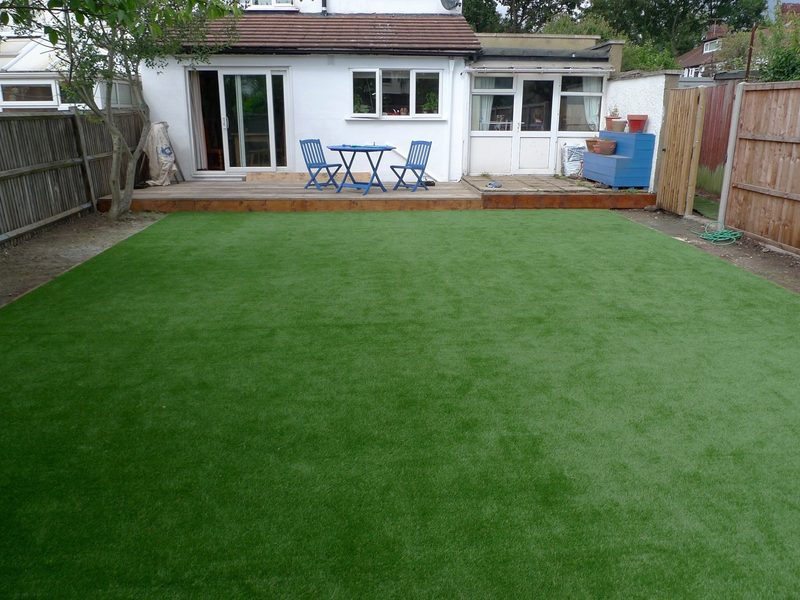
Artificial turf earns its place where real grass struggles: deep shade, a dog run worn down to dirt, a narrow side yard the mower can't reach. It isn't the right answer for every yard, and the trade-offs are worth knowing before it goes down.
The base under artificial turf
What's under the turf decides how it holds up. The Synthetic Turf Council's base guidelines say the base has to give the turf a structurally sound foundation and a path for drainage, and they call the stone base an integral part of the system's long-term stability and flatness. That guide is written for sports fields, but the principle carries to a backyard.
Before the base is dug, Georgia 811 gets buried lines marked. On top of the finished base, the turf is laid, seamed and secured, and infill is brushed down between the fibers.
How hot does artificial turf get?
Hotter than grass, by a lot. Penn State's sports surface researchers report that synthetic turf gets significantly hotter than natural turf in sunlight. On one June day on their Pennsylvania test field, the hottest turf reading ran about 60 degrees above the hottest natural grass. A University of Florida turfgrass professor says surfaces can exceed 160 degrees in full sun, a risk for people and pets.
Watering cools it down, but not for long: Penn State notes the effect often fades within an hour. In a Georgia summer, that makes placement matter, and turf in a shaded side yard is a different experience from turf on an open lawn.
Is artificial grass maintenance free?
No, though it's far less work than a lawn. The UF professor says synthetic turf doesn't need mowing, weeding, fertilizing or irrigation, but it isn't maintenance free: it needs periodic brushing and replacement of the infill.
Water is the other trade-off. UF notes that synthetic turf goes down over compacted soil, which cuts how much rain soaks in and increases the volume and speed of runoff. Where water already collects, plan the drainage first.
If you'd rather keep real grass, sod installation and regular lawn care are the other path, and a shady spot can also become a bed of shade-loving plants through our planting work.
Living with artificial turf
Is artificial turf good for dogs?
It can work for a dog run, since it won't wear down to dirt. Two cautions: a University of Florida turfgrass professor says surfaces can get hot enough in full sun to pose a risk to pets, and the turf still needs periodic brushing and fresh infill.
Does artificial turf drain?
Through the base, if it's built for it. The Synthetic Turf Council says the base has to provide a medium for drainage, and UF notes that the compacted soil under turf lets less water soak in, so heavy rain runs off faster.
What is infill?
The loose material brushed into the turf near the surface, between the fibers, as the Synthetic Turf Council defines it. UF says it needs replacing from time to time.