
Services Lawns and sod
Sod installation in Rome, GA
For sod installation in Rome, GA, the old turf and weeds come out first, the soil is worked and smoothed, and the sod goes down tight in staggered rows, watered right away.
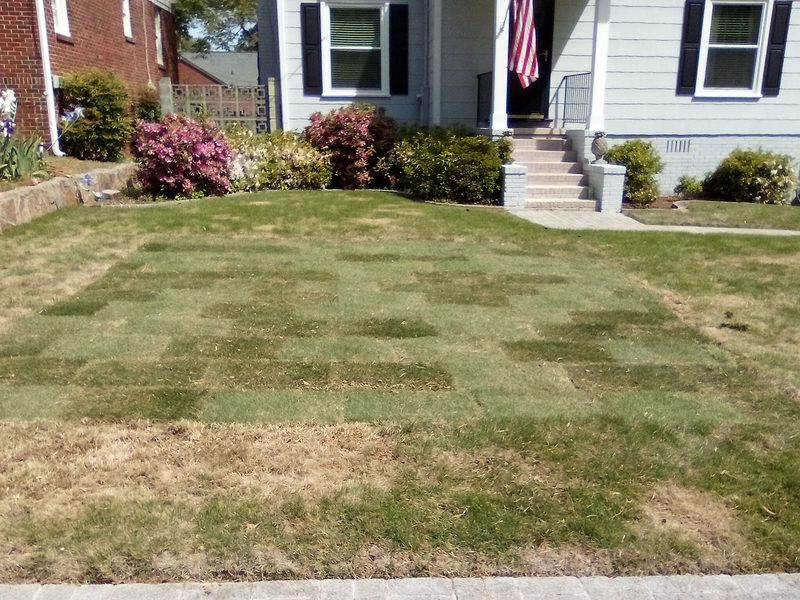
Sod installation is the fastest way to turn bare ground into a lawn, and on a slope it covers the soil from the first day. Whether it takes hold depends on the soil under it and the watering after it. The soil prep is part of the job; the watering follows UGA's schedule.
Preparing the soil for sod installation
UGA Extension says the ground gets the same preparation for sod as for seed: clear the debris, till, work in lime and fertilizer, and smooth the surface. The goal is loose, even ground that new roots can grow into.
Then the sod goes down. UGA's method is to butt the ends tightly together without stretching them, avoid gaps and overlaps, and stagger the joints like brickwork. Pieces cut to fit around beds and walks keep those edges just as tight. The new lawn gets rolled to press the sod against the soil and squeeze out air pockets.
When should sod go down?
UGA's Fulton County office says the best time to lay warm-season sod is May through August. Tall fescue runs the other way: UGA calls September and October the ideal months for seeding or sodding it.
Warm-season sod laid late in the year is the gamble. UGA reports that winter injury was greater on zoysiagrass and centipedegrass than on bermudagrass sodded late, so a fall job may be worth holding until spring.
Watering new sod through its first weeks
Water starts within 30 minutes of installation, a quarter to half an inch, UGA says. After that, light watering every day, or more often if needed, keeps the sod moist until it has firmly rooted, about two weeks. Then the schedule shifts to less frequent, deeper watering.
Georgia's watering rules make room for a new lawn. EPD allows new turf to be watered during installation and for 30 days after, a rule UGA ties to the Georgia Water Stewardship Act of 2010. A drought declaration can add limits, so check the current level with your water provider.
A level, well-drained base makes all of this easier, which is where yard grading comes in. A sprinkler system takes the hose work out of those first weeks, hydroseeding can suit big or steep ground better, and once the sod has rooted, regular lawn care keeps it mowed.
Before the sod goes down
How deep is the soil worked before sod?
UGA says to work starter fertilizer and lime 3 to 4 inches into the soil before planting, and deeper tilling is better where the equipment allows.
Which grass should I choose for sod?
UGA lists bermudagrass as adapted statewide and tall fescue as a cool-season grass best suited to the Mountain and Piedmont regions, and it reports that zoysiagrass use has grown sharply across Georgia. Sun, shade and foot traffic narrow it down from there.
Can sod be laid in winter?
Tall fescue sod, yes: UGA says winter sodding is acceptable because fescue sod starts as a mature plant. Dormant warm-season sod is riskier, since UGA warns the roots of newly laid sod can freeze.