
Services Hardscapes and outdoor living
Backyard ponds and water features in Rome, GA
Backyard ponds and water features in Rome, GA: lined ponds with a pump and filter, fountains and small waterfalls, placed where yard runoff won't wash into them.
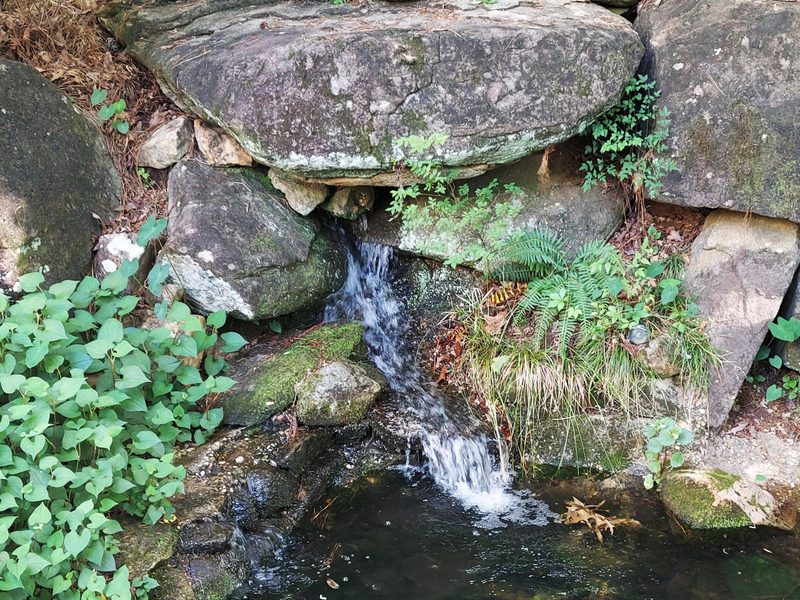
A backyard pond brings sound and movement to a yard, and a little wildlife with it. The parts that keep one healthy are simple: a liner that holds the water, a pump that keeps it moving, a filter when there are many fish, and a spot away from runoff.
Picking the spot for a pond
Most of the choice is about where you'll enjoy it: in view of a window or the patio, close enough to hear the water, with room for planting around the edge. The firmest rule is about what flows in. Penn State Extension says to put a pond where it won't receive runoff from surrounding lawns or roads.
Backyard pond liners and digging
Penn State Extension says a liner is necessary for most backyard ponds, to keep the water from escaping into the soil. Clemson Extension adds that fiberglass and rigid plastic liners are durable and long-lived but generally shallow, and they can crack in extreme freezes.
A pond is a digging project, so the buried lines come first. Georgia 811 asks do-it-yourselfers and contractors alike to reach 811 at least three business days before any digging project.
Pumps, filters and moving water
Penn State says pump size comes down to the gallons per hour it can recirculate. A pond that will hold a large number of fish needs a filter, and the basic types are mechanical, biological and plant filters.
Moving water is half the appeal. A small waterfall, a spill over stone or a bubbling fountain gives you the sound from the patio, and the pump that runs it keeps the water circulating. Moving water has a practical side, too: a UGA entomologist notes that mosquito larvae can't develop in flowing water. The pump needs an outdoor outlet nearby, and new circuits are electrician work. The pump and filter also need room to reach them for cleaning, which shapes where the pond goes.
How deep should a pond be for fish?
Penn State says most fish need at least two feet of water, with the exact depth depending on the fish.
Clemson Extension, writing for South Carolina, goes further for warm climates: plants and fish should have areas at least 3 to 4 feet deep as a cool refuge in summer heat, and those deep spots also serve as a refuge in cold weather.
A pond looks best set into planting around its edge, and landscape lighting can make it a nighttime feature too. If yard water runs toward the spot you have in mind, a drainage solution comes first.
Pond placement and fountains
Can a pond go at the low spot of the yard?
It's a risky place for one. Penn State Extension says to keep a pond away from runoff from lawns and roads, which can carry herbicides, fertilizers and insecticides into the water, and the low point of a yard is where runoff ends up.
Does a fountain help a pond?
Mostly it looks and sounds good. Penn State Extension calls fountains mostly decorative, though they can add some dissolved oxygen to the pond's surface layers.