
Services Design and installation
Landscape contractor for installation in Rome, GA
When you need a landscape contractor in Rome, GA to put a yard together, we install the whole thing: soil prep, trees, shrubs, beds, sod and mulch, from a plan or from your own ideas.
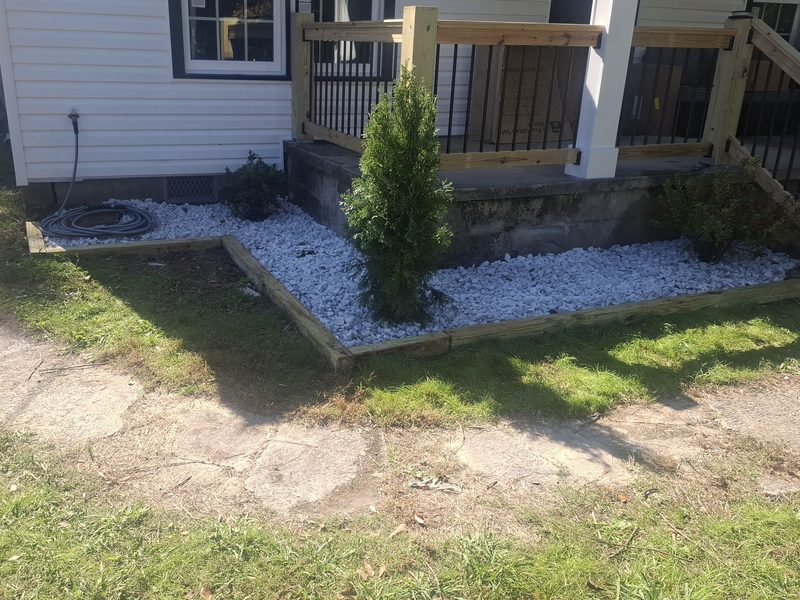
A landscape contractor's job is to turn a plan into a yard that grows. That means testing the soil, planting in the right season and sending rain where you want it. We handle the planting, the soil work and the finishing touches, and we tie in the patios, walls and sprinklers when the plan calls for them.
What to expect from a landscape contractor
A good installation runs in an order that protects the work already done: the jobs that tear up the ground go first, so grading and drainage come before hardscapes, irrigation lines before plants, and sod and mulch last. Doing it backward is how a new lawn ends up with a trench through it.
Some projects are a weekend's worth of planting. Others are a backyard renovation: tearing out tired shrubs, adding a patio, rerouting water and starting the beds over.
How new plants take root
Prep comes first. UGA Extension recommends soil samples 2 to 3 weeks before planting, since the results set the lime and fertilizer a bed needs. Soil testing is available through your county Extension office, and the results carry over to everything planted after.
Then the digging. UGA's planting bulletin says the planting hole should be at least twice as wide as the root ball and only as deep as the root ball. Wide and shallow, in other words, not narrow and deep.
Then comes the water. UGA's method is to water the planting site as the backfill goes in, which gets rid of air pockets around the roots.
Where a bed sits on clay, the soil needs help too. Georgia's famous red clay gets its color from iron oxides left behind by long weathering, the New Georgia Encyclopedia explains. For new beds, UGA names pine bark humus and composted leaf mold as the best amendments for clay soils.
When is the best time to plant in Georgia?
Fall and winter, for container-grown trees and shrubs. UGA says container-grown plants transplant well through most of the year, but fall and winter are the best months.
That doesn't mean everything waits for October. Hardscapes, drainage and grading can go in whenever the ground is workable, so a spring project can build the bones now and plant in the fall. Grass keeps its own calendar: warm-season sod goes down in late spring and summer, fescue in the fall.
No plan yet? Landscape design comes first, and new beds get the soil work described under planting and flower beds.
Before the planting starts
Do I need a design before you install?
Not always. A few shrubs along the porch don't need a drawing. A whole backyard usually does, because the patio, the beds and the sprinkler zones all depend on each other. If you're not sure, that's a good first question to ask.
Should compost go in every planting hole?
No. UGA research found it isn't necessary to add organic amendments like peat moss, compost or leaf mold to the planting hole of a tree or shrub. Amending makes sense across a whole flower or vegetable bed, where pine bark humus and composted leaf mold are UGA's picks for clay.
How long do new shrubs need extra water?
UGA says to keep the root system moist, but not too wet, for the first 6 to 8 weeks after planting. Outside a Level 3 drought, Georgia's watering rule also lets new plants be watered at any hour for 30 days after they go in.