
Services Hardscapes and outdoor living
Hardscaping in Rome, GA
Hardscaping in Rome, GA is everything built in a yard that isn't growing: patios, retaining walls, walkways, steps, fire pits and outdoor kitchens. We plan and build them to fit the planting around them.
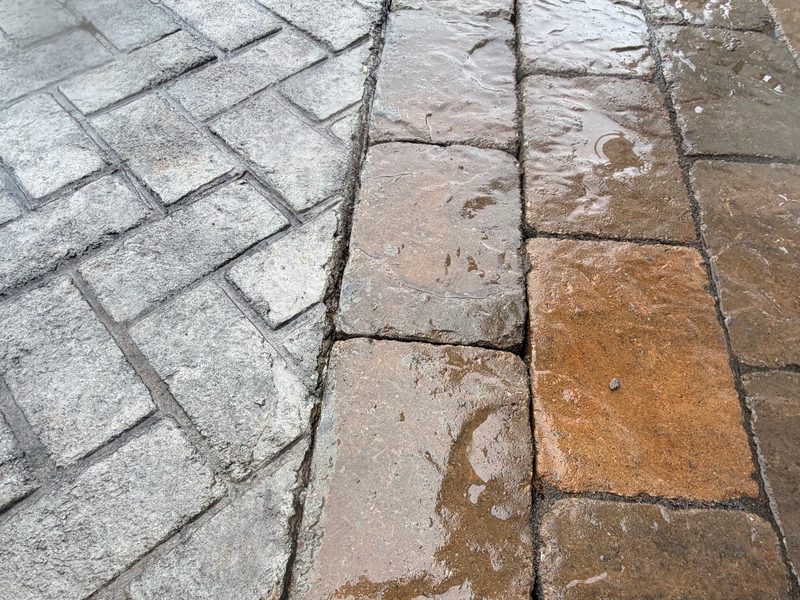
Somewhere to sit, a path that doesn't turn to mud, a level spot on a hill: hardscaping turns a yard into places to use. On a sloped lot, it's often what makes the yard usable at all.
University of Florida Extension's definition is a good one: hardscape covers built structures such as patios, ponds, walkways, garden walls and rock gardens.
How much of the yard should be hardscape?
The trick is balance. The same Florida guide says to use patios and retaining walls to create spaces, but to find a good balance between the hardscape and the planted areas. A backyard that's all pavers bakes in July. One with a patio, a planted edge and a strip of lawn feels finished.
The hardscapes we build:
- paver patios, for dining, grilling and gathering;
- retaining walls, to hold a slope and make level ground;
- walkways and steps, in pavers or flagstone;
- fire pits and outdoor kitchens, the parts that turn a patio into a place to cook and gather.
Where hardscape and planting meet
Landscape is the whole yard, the plants and the built parts together. Hardscape is the built part, and the planted part (grass, shrubs, trees, flowers and the mulch around them) is sometimes called softscape.
You'll hear contractors use "landscaping" for both, and plenty of projects mix them. That's why a patio and the beds around it belong in the same plan.
Lighting bridges the two: low-voltage landscape lighting tucked into a wall cap or along a path makes the hardscape usable at night.
Planning around water and buried lines
Every hard surface changes where rain goes. Florida's guide calls for paved areas sloped at least 2 percent to send stormwater toward planted areas, and NC State Extension notes that hard surfaces collect heat and add runoff.
Before building, UGA suggests noting downspouts and drain lines and checking that roof water runs away from the foundation.
Then there's what's underground. Gas, power, water and cable lines may run under any yard, and a patio base or a wall footing digs right where they might be. That's why Georgia 811 gets the lines marked before the base is dug.
If water's already a problem in the yard, it's worth solving before anything gets built on top of it, so yard drainage may be the first job.
Before you build a hardscape
How big should a patio be?
As big as what you'll do on it, and no bigger. University of Florida Extension's design guide says paved areas should be large enough for the intended activity and no more. Measure the table and chairs you own, add room to walk around them, and you're close.
Does Georgia 811 need to mark the yard before a patio goes in?
Yes, when the digging is done with machines. Georgia 811 is the notice system for mechanized digging such as excavation and grading, so the utility lines get marked before the base is dug. Georgia 811 encourages homeowners to call even for small hand digging, though the law doesn't require it.