
Services Lawns and sod
Lawn aeration in Rome, GA
Core aeration pulls plugs of soil from a compacted lawn so water, air and roots can get in, and lawn aeration in Rome, GA works best while your grass is actively growing.
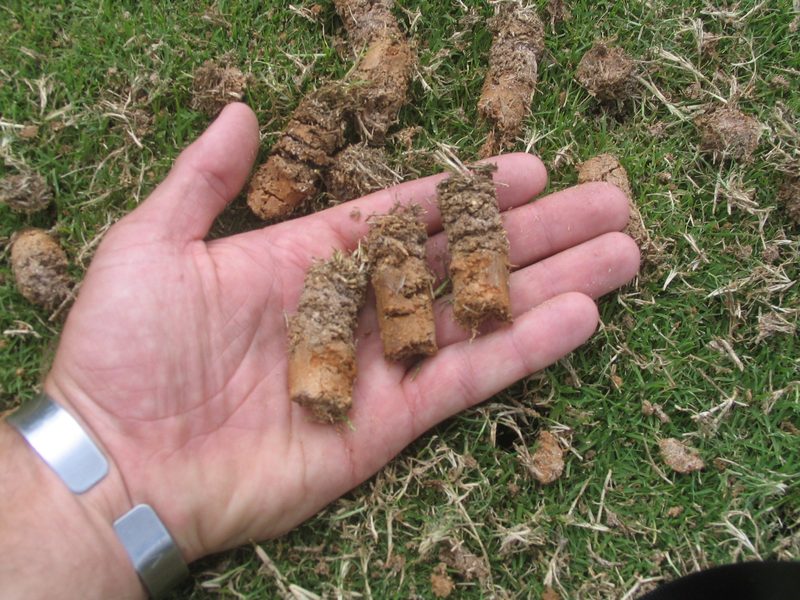
Puddles after a rain, thin grass along the path everyone walks, roots that stay shallow: those can all point to soil packed too tight. Core aeration is UGA's answer to compaction: it pulls small plugs of soil out of the lawn, opening a path for water, air and nutrients to reach the roots again.
What lawn aeration does underground
UGA Extension describes aeration, or coring, as a way to combat soil compaction: the aerator removes plugs of soil, which improves water, nutrient and air movement.
The roots benefit most. A UGA turfgrass specialist says relieving compaction generally stimulates rooting and promotes deeper roots, which pull water and nutrients from a greater volume of soil. Ideal cores, by the same account, run 3 to 4 inches deep and about half an inch across.
Why does ground get so compacted?
Part of it is what's underneath. Where grading has stripped the topsoil, UGA notes, the subsoil left behind can be high in clay, low in organic matter, and hardened and compacted when dry, which it calls common in the northern half, or Piedmont, of Georgia. That's the red clay the state is known for, colored by iron oxides left behind by long weathering, the New Georgia Encyclopedia explains.
A lawn growing on that kind of ground can thin out, shed water instead of soaking it up, and struggle through dry spells. Aeration won't change the soil type, but it gives the roots room to work. Foot traffic adds to it: the path everyone takes across the yard packs the ground a little more each time, which is why thin grass often traces a route.
Clay soaks up water slowly, too: the Metropolitan North Georgia Water Planning District says the Atlanta region's clay absorbs up to about half an inch an hour.
Timing aeration to your grass
Aerate while the roots are actively growing, UGA says. For warm-season grasses like bermudagrass and zoysiagrass, that means once the soil 4 inches down is at least 65 degrees and rising. UGA's Fulton County office calls May through August a good stretch for core aeration of warm-season lawns.
Tall fescue, a cool-season grass, runs on the opposite calendar. UGA's fescue lawn calendar marks October as a best month for core aeration, with September also possible.
Aeration pairs well with the rest of a lawn plan. Feeding comes after, on the lawn fertilization schedule for your grass, and regular lawn care keeps the mowing height right while the turf recovers. Thin spots may call for new sod or hydroseeding.
Core aeration, answered
How often should a lawn be aerated?
UGA sources differ a little: one Extension circular says an average home lawn can benefit from yearly aeration but does fine every 3 to 4 years, and a UGA turfgrass specialist says the typical warm-season lawn doesn't need regular or annual aeration.
What's the difference between core and spike aeration?
Core aeration pulls plugs of soil out of the lawn, while spike, or solid tine, aeration pokes holes. UGA says the benefits of hollow tine aeration last longer because the core is removed.