
Services Irrigation and lighting
Landscape lighting in Rome, GA
Landscape lighting in Rome, GA: low-voltage fixtures along paths and steps, soft light on trees and the front of the house, and controls that switch it on at dusk and off at bedtime.
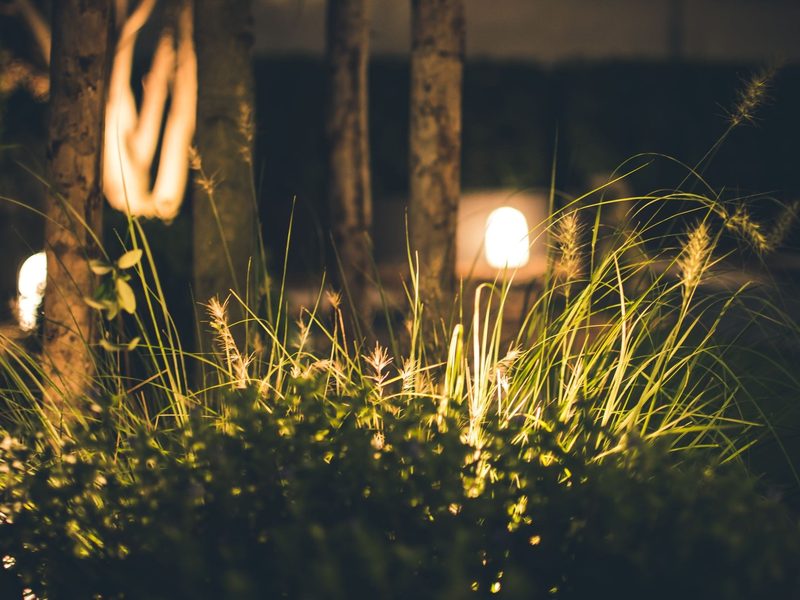
Lighting a yard does two jobs. It makes paths and steps safe to walk after dark, and it gives the trees, beds and patio a second life once the sun goes down. Around Rome we install low-voltage systems that run from an outdoor outlet and switch themselves on and off.
Low-voltage landscape lighting, explained
Iowa State University Extension describes how a low-voltage system works. It runs off a regular 120-volt outlet through a power pack, which steps the voltage down to 12 volts for the fixtures. The power pack is sized by adding up the wattage of every fixture on the system, so the lighting plan comes first and the hardware second.
Where should outdoor lights go?
Iowa State's guidance comes down to three rules:
- Light the obstacles first. Steps, paths and any change in sidewalk level get light before anything decorative does.
- Aim for moonlight, not floodlight. Night lighting should imitate moonlight without glare.
- Hide the source. Tuck fixtures behind shrubs, trees or flowers, so you see the glow and not the bulb.
From there it's design: a tree lit from below, a soft wash across the front of the house, a few lights around the patio where people sit.
Light the yard, not the neighbors
The National Park Service's outdoor lighting principles are written for parks, but they work just as well in a backyard. Fixtures should be chosen and set at a height and spread that keeps light from spilling past the area you mean to light. A fully shielded fixture sends its light down onto the path instead of up into the sky.
That's good manners toward a neighbor's bedroom window, and it keeps the stars visible from your own patio.
LEDs, timers and photocells
Purdue Extension says LEDs last longer and use less energy than incandescent bulbs or compact fluorescents, a good fit for fixtures that burn every night.
Controls count too. Purdue notes that timers and photocells save energy by turning lights off when they aren't needed. A photocell turns the system on at dusk, and a timer shuts it off at whatever hour you choose.
Lighting pairs naturally with a paver patio, a walkway with steps or an outdoor kitchen. If you're planning a new yard, add lights at the landscape design stage so the cable goes in before the sod and mulch.
Lighting the yard at night
Which outdoor lights suit the front of a house?
Soft ones. Iowa State Extension's advice is to imitate moonlight without glare, hide the light source behind shrubs or plantings, and light the walk and steps to the door first. Shielded fixtures keep the light on the house and off the street.
How is low-voltage lighting powered?
From a standard 120-volt outdoor outlet, through a power pack (often called a transformer) that steps the voltage down to 12 volts, Iowa State Extension explains. If there's no outlet where the power pack needs to go, adding one is a job for an electrician.
Do landscape lights need a timer?
They don't need one, but it helps. Purdue Extension says timers and photocells can save a lot of energy by turning lights off when they're not in use, and Iowa State notes that power packs may come with photocells, remote controls or motion sensors built in.