
Services Lawns and sod
Hydroseeding in Rome, GA
Seed, fiber mulch and fertilizer sprayed on in one slurry is what hydroseeding in Rome, GA puts on new lawns, bare ground and slopes where loose seed would wash away.
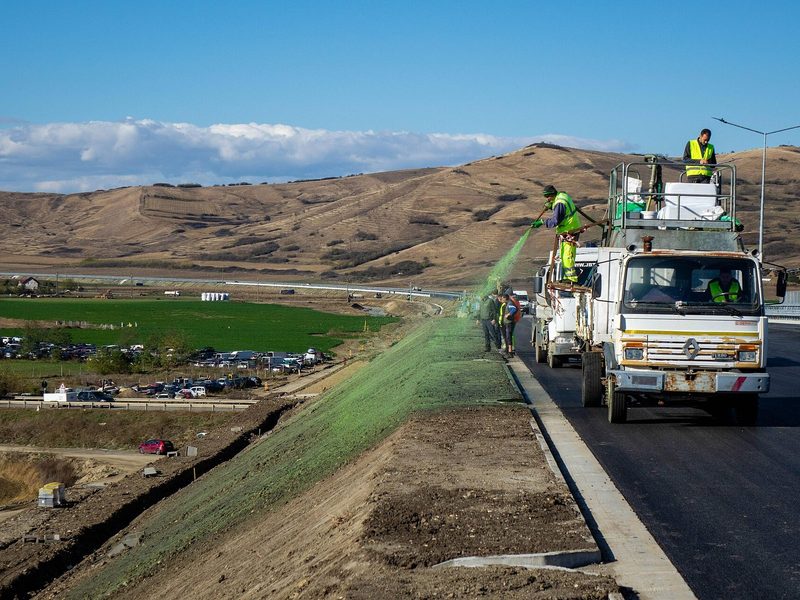
Hydroseeding puts seed down with its own starter kit. Seed, water, fiber mulch and fertilizer go on in one sprayed coat that clings to the ground, so the seed isn't left loose on bare dirt for the first storm to carry off.
How hydroseeding works
In UGA Extension's description, seed is mixed with water and additives in a large tank, then sprayed under high pressure onto the area being planted. The mix can carry cellulosic fiber mulch, fertilizer, lime and tackifiers, which help the mix stick.
A close cousin is hydromulch, which the USDA's conservation service defines as water, fiber mulch and tackifier sprayed on burned slopes to prevent soil erosion or help plants grow back.
Where does hydroseeding make sense?
UGA says hydroseeding is commonly reserved for large, severely sloping or hard-to-reach areas, such as roadsides, where speed of coverage and worker safety come first. It also takes specialized equipment and is best done by professionals.
At a home, that points to a few jobs:
- a big new lawn after construction or grading;
- a bank too steep to rake seed into safely;
- bare ground where seed and straw would wash off in the first hard rain.
For a small patch by the front walk, a few pieces of sod can make more sense.
On a slope, the sprayed coat also slows the rain that would otherwise cut small channels through bare soil before the grass can hold it.
Seeding windows for Georgia grasses
Hydroseed follows the same calendar as any seed. UGA's establishment bulletin puts tall fescue at September to October, or late February through March. Warm-season grasses wait until the soil 4 inches down is consistently 65 degrees and rising, typically mid to late spring, and common bermudagrass seed is listed for May to June.
There's a cutoff, too. UGA says seeding warm-season grass no later than the first to middle of August gives seedlings time to root before cold weather. For tall fescue, UGA generally doesn't recommend seeding in December or after April.
One catch: if a preemergence herbicide went down in the last 60 to 90 days, UGA says to either skip seeding or wait as late as possible. That's one more reason to plan weed control and seeding together, and once the new grass is up, lawn care takes over.
What to expect from hydroseed
Is hydroseeding better than sod?
Sod gives you grass the day it's laid, while hydroseed needs weeks to fill in but covers big or steep ground in one pass. Your timeline and the site decide it.
How long does hydroseed take to grow?
UGA says tall fescue seed germinates in 5 to 10 days under favorable conditions and is ready for its first mowing in 2 to 3 weeks. Warm-season grasses like bermudagrass wait for warm soil before they get going.
Does hydroseed need watering?
Yes. New seed needs steady moisture to sprout, and Georgia's outdoor watering rules allow new seed and turf to be watered during installation and for 30 days after; check the current drought level, since Level 3 can add conditions.