
Services Beds and planting
Mulch and pine straw installation in Rome, GA
Mulch installation and pine straw in Rome, GA: beds cleaned up and edged, then covered at the right depth for the plants in them, with mulch kept back from trunks and stems.
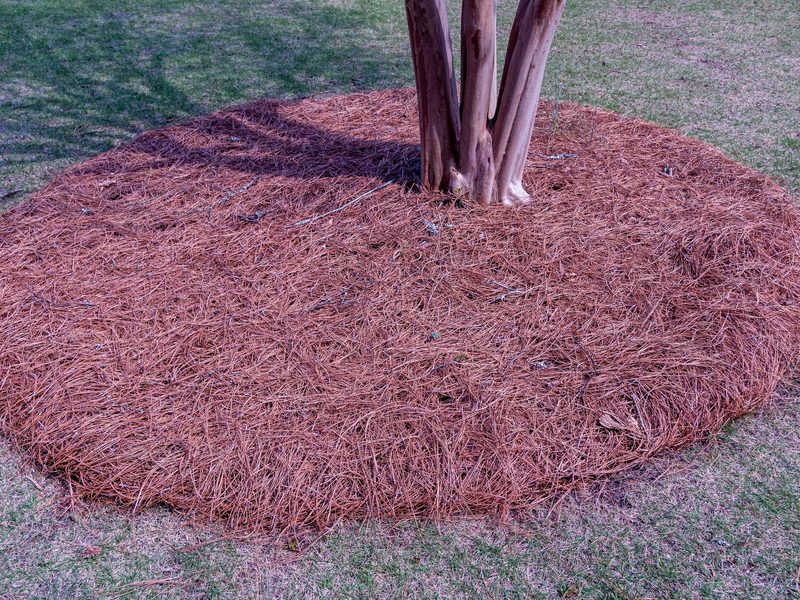
A fresh layer makes the beds look cared for, and underneath it's holding water in the soil and keeping weeds down. Mulch installation is the last step in a bed, and it keeps working long after the job is done. UGA Extension calls mulch a vital part of the Southern landscape.
Mulch installation at the right depth
First, the beds get weeded and edged, so the new layer has a clean line against the lawn and no weeds underneath. Then comes depth, where more isn't always better. UGA's numbers depend on the material and the plant:
- Beds of shrubs and other ornamentals: 3 to 5 inches, spread out past the plant's canopy where possible.
- Pine straw: a layer at least 2 to 4 inches thick, on a UGA specialist's advice.
Fresh straw settles, so a new layer goes down thicker than it ends up: the same specialist says 4 to 5 inches of fresh straw settles to about 2. There's a ceiling, too. Past about 6 inches, more pine straw won't do any more good.
Keep mulch off the trunk
One mulch mistake even has a name: volcano mulch, the cone piled up against the base of a tree. UGA Extension says never to do it. UGA's tree care bulletin says to pull all mulch back 4 to 6 inches from the trunk to keep disease from invading it.
A wide, flat layer does more than a tall, narrow one. UGA notes that a small ring of mulch around the trunk provides little benefit to the plant. UGA's Georgia Green Landscape guidance also says to leave the root flare, where the trunk widens at its base, exposed.
A wide ring earns its keep in other ways, too. It keeps mowers and string trimmers back from the bark, and in deep shade under a big tree, where grass struggles, a mulched bed can take the lawn's place.
Why mulch beds every year?
UGA says organic mulches such as pine straw and pine bark break down over time and should be replenished at least once a year.
Keeping the layer up keeps the benefits. UGA's composting circular says garden mulch suppresses weeds, reduces soil erosion, keeps soil cooler in summer and warmer in winter, and conserves moisture. Bare, freshly seeded ground benefits too: UGA recommends a thin layer of pine or wheat straw over new seed to help prevent erosion and hold moisture.
Mulch caps off a new flower bed, and it goes down well after a fall yard cleanup or a round of shrub trimming, when the beds are clean and easy to reach.
Straw and tree rings
Should I remove old pine straw before adding new?
There's no need. A UGA Extension specialist's advice is to add new straw on top of the old to make a layer at least 2 to 4 inches thick.
How thick should mulch be around a tree?
For young trees, UGA says 3 to 4 inches of organic mulch spread out past the edge of the canopy, pulled back 4 to 6 inches from the trunk.