
Services Irrigation and lighting
Irrigation and sprinkler system installation in Rome, GA
Sprinkler system installation in Rome, GA: lawn zones and bed zones kept apart, drip lines for shrubs and plantings, and a controller set to water inside Georgia's rules.
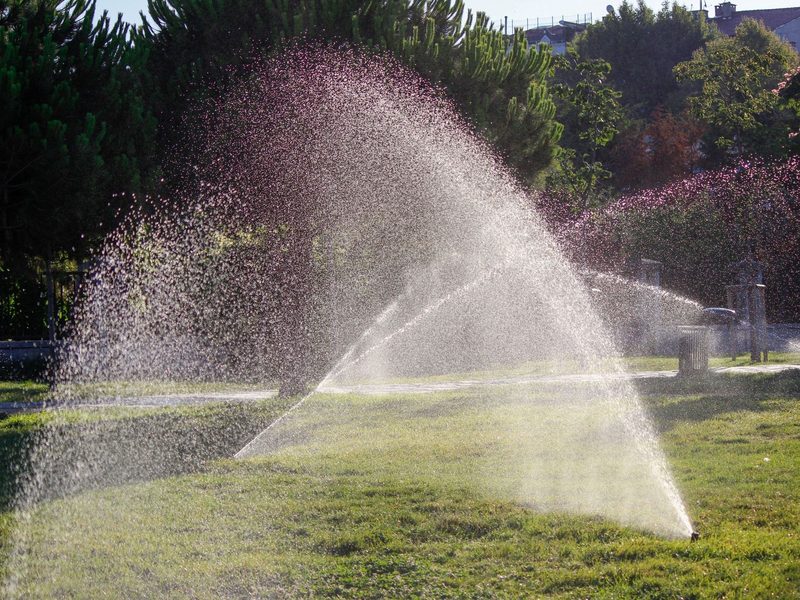
An irrigation system earns its keep in July, when a new lawn or a bed of young shrubs can't wait for rain. In Rome we put in sprinkler systems for lawns, drip irrigation for beds and shrubs, and the controller that runs both. Done right, it puts water where the roots are, on a schedule nobody has to remember.
Sprinkler system installation, zone by zone
A system is laid out in zones, each a group of heads or drip lines that run together. One rule comes straight from UGA Extension's guide to choosing an irrigation contractor: lawn areas should be on separate zones from flowers or shrubs. Grass and shrubs drink differently, so one schedule for both overwaters one or starves the other.
Clay soil sets the pace, too. Clay soils around the Atlanta region absorb water slowly, up to half an inch an hour by the regional water planning district's count, so a well-set controller waters in shorter cycles that the ground can actually take.
Three parts round out the system:
- a backflow preventer, which keeps irrigation water from flowing back into the drinking water supply;
- a rain shut-off sensor, which Georgia requires on new systems;
- a controller, and if you want it, a weather-based one. EPA's WaterSense program explains that these use local weather and landscape conditions to decide when and how much to water.
Drip irrigation for beds and shrubs
Sprinklers suit turf. For individual shrubs and trees, UGA says drip irrigation is especially suitable, and it works well in flower and vegetable beds too. Water goes straight to the root zone instead of onto leaves, mulch and the sidewalk.
There's a practical bonus in Georgia: drip irrigation and soaker hoses are on EPD's list of outdoor watering allowed at any time of day, outside the highest drought levels.
What does Georgia's watering rule allow?
Under the Georgia Water Stewardship Act, daily outdoor watering of lawns, trees and shrubs is allowed only between 4 p.m. and 10 a.m. EPD keeps a list of uses allowed at any hour, and one of them helps every new project: newly installed plants, seed and turf can be watered at any time during installation and for 30 days after.
Drought declarations can tighten those rules, and EPD or your water provider can tell you the current drought level.
A system that already sputters, leaks or soaks the driveway may only need sprinkler system repair. New lawns and sprinklers go together, since new sod needs daily water at first, and if the plants aren't chosen yet, UGA's advice to group them by water need starts at the landscape design stage.
Sprinklers and Georgia's watering rules
Is a rain sensor required on a new sprinkler system in Georgia?
Yes. Georgia EPD's WaterWise guide says rain shut-off sensors are required by law on new systems, and UGA Extension says the state requires a backflow preventer and a rain shutoff device. Some cities and counties add their own requirements.
What hours can I water my lawn in Georgia?
Outside of drought restrictions, Georgia's Water Stewardship Act allows daily outdoor watering of lawns and plants between 4 p.m. and 10 a.m. Drip irrigation, soaker hoses and hand watering with a shut-off nozzle are allowed at any hour outside a Level 3 drought. Your water provider can tell you if a drought level is in effect.
Do I need a backflow preventer?
On a system tied to city or county water, almost certainly. UGA Extension notes that most plumbing codes require a backflow prevention device wherever a permanent irrigation system connects to a public water supply, and it's on Georgia's list of required parts.