
Services Irrigation and lighting
Sprinkler system repair in Rome, GA
Sprinkler system repair in Rome, GA for the problems that waste water and leave brown spots: heads that stick or tilt, leaks at the joints, valves that won't shut off, misting from high pressure and a controller that skips a zone.
A brown stripe in the lawn, a soggy patch that never dries, a head that sprays the street: sprinkler system repair is mostly detective work. Each problem has a short list of likely causes, and finding the right one means checking the system zone by zone.
Sprinkler system repair for the usual problems
EPA's WaterSense program and the Cobb County Water System's audit checklist look for the same trouble. Here's what those checklists cover, and what each problem means for the yard:
- Heads that don't pop up all the way or sit tilted. EPA warns they can spray the wrong areas, which leaves the right ones dry.
- Rotors that don't rotate. One strip gets soaked while the rest of the arc goes thirsty.
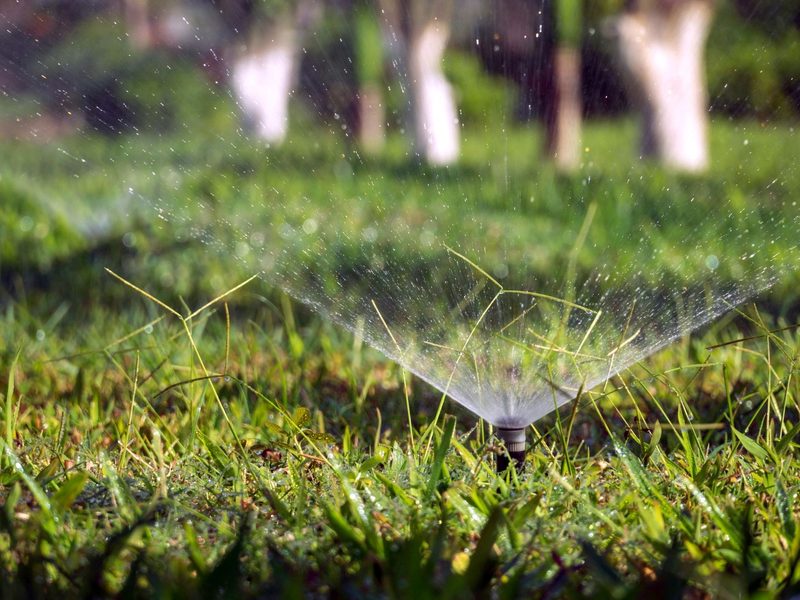
- Misting spray heads. EPA ties misting to high water pressure, and the fine spray drifts off before it lands.
- Uneven coverage. One patch stays green while the next one browns.
- Overspray onto pavement. Water that runs down the driveway never reaches a root.
Is your system leaking?
Leaks hide. EPA says they can show up at the joints where sprinklers meet the piping, and that water pooling on the surface between cycles can mean a break underground.
Leaking joints can also point to a second problem, too much water pressure, so a good repair checks for both. Finding a leak means running each zone, watching each head and checking the valves.
A spring checkup before summer
Cobb County's audit checklist has a step for the timer: turn it on by hand and make sure each zone comes on and runs for its scheduled time. A system that runs before dawn can lose a zone without anyone noticing until the grass shows it. A checkup is also the time to make sure the controller waters inside Georgia's daily window, 4 p.m. to 10 a.m.
Freezes and backflow testing
The backflow preventer is the part to watch in winter. UGA Extension agents in north Georgia point out that it sits at ground level, where freezing weather can reach it, while buried pipe should sit below the few inches of ground that freeze.
It may also need a yearly test. Georgia's drinking water rules have water suppliers require field tests for the backflow assemblies under their programs after installation or repair and at least once a year after that. Your water provider can tell you whether yours is on that list.
Some systems aren't worth patching: a poor layout, the wrong heads, no backflow preventer at all. If that's yours, starting over with a new sprinkler system installation makes more sense. If the soggy spot turns out to be groundwater instead of a leak, the yard's drainage is what needs fixing.
Leaks, mist and freezes
Why do my sprinklers seep water when the system is off?
EPA's WaterSense program says a valve that can't close completely can let a system slowly seep water even when it's turned off.
Why does my sprinkler mist instead of spray?
EPA's WaterSense program links misting to high water pressure. It suggests spray heads with built-in pressure regulation, which hold the pressure steady so the nozzles can work the way they're meant to.
Does a sprinkler system need winterizing in north Georgia?
Mostly the parts above ground. UGA Extension agents in north Georgia say only the top few inches of ground tend to freeze in most of the state, so buried pipe should sit below that. Backflow valves sit at ground level and could be in danger, so they're the parts to protect before a hard freeze.