
Guides Lawn care
Dethatching a Georgia lawn: when thatch is too thick
Dethatching cuts out thatch, the layer of dead grass stems and other plant matter that builds up between the grass and the soil. UGA Extension advises it once that layer is thicker than half an inch, and Arkansas Extension names bermudagrass and zoysiagrass as the grasses most prone to a thick one.
Updated November 16, 2026
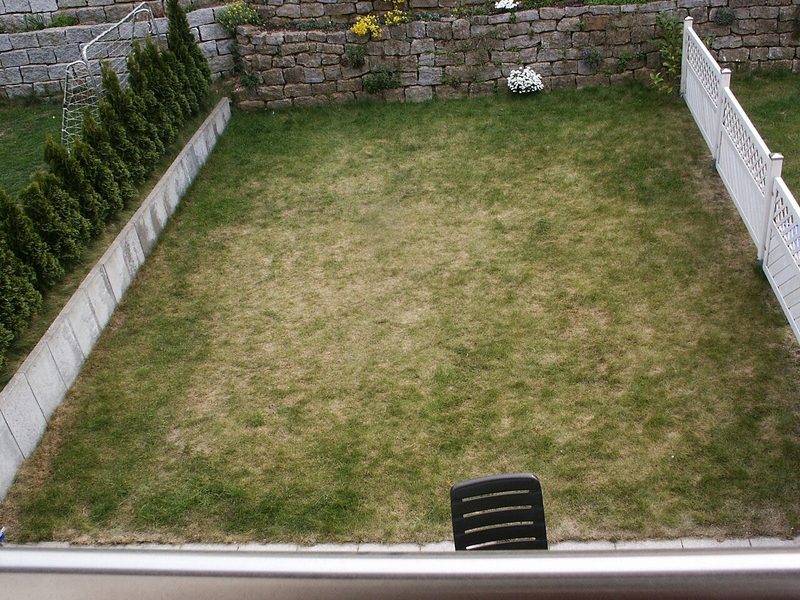
The advice below comes from UGA and from Tennessee and Arkansas extension, each named, and some of UGA's comes from a 1996 news story. Our lawn aeration webpage covers core aeration, the other way to work on thatch.
What causes thatch?
In part, the way a lawn is kept. UGA Extension's Glynn and McIntosh county office says thatch can become a problem when a lawn isn't mowed, irrigated and fertilized correctly, and that excess nitrogen can lead to it.
Two of our grass guides cover cases of it: the zoysia grass guide for Emerald zoysia, and the centipede grass guide for centipede decline.
How thick is too thick?
Thicker than half an inch, by UGA's measure. Its Glynn and McIntosh office says excess thatch reduces water infiltration, makes for shallow-rooted turf and encourages insect and disease problems. The 1996 UGA story adds that thatch dries out faster than soil, so a thatchy lawn takes more stress in a summer drought.
That story's check needs no tools. Dig your fingers into the sod, grip the grass and try to move it around. If the grass moves, there's too much thatch, and a lawn that feels really spongy and soft underfoot, particularly centipedegrass, is another sign.
Which grasses build the most thatch?
Grasses that spread both above and below ground. University of Arkansas Extension says bermudagrass and zoysiagrass, which spread by rhizomes and stolons, are the most prone to excessive thatch, and that St. Augustinegrass and centipedegrass, which spread by stolons, can still build up unwanted layers.
When should you dethatch?
Once the grass is growing, by most of the advice here. The 1996 UGA story calls late-winter dethatching of dormant turf normally a good idea, but after that year's hard winter, its turf specialist said it'd be safer to wait until the turf greens up and is growing well, but before the hot, dry weather of July and August.
UGA's Fulton County office, in its May 2025 lawn update for warm-season grasses, told homeowners to hold off on dethatching until the next month.
University of Tennessee Extension allows either window for bermudagrass, centipedegrass, St. Augustinegrass and zoysia: late winter while they're dormant, or after green-up, when rising soil temperature promotes root and shoot growth.
How is a lawn dethatched?
The usual machine is a vertical mower. University of Tennessee Extension says its blades or tines are set to cut through the thatch layer and lightly touch the soil below.
Blade spacing depends on the grass, by the 1996 UGA story. On centipede or St. Augustine, the blades need to be two to three inches apart and the lawn crossed only once. With bermuda or zoysia, the blades can be closer together and the lawn crossed more than once. Either way, it says, do it gradually.
It's a messy job. Arkansas Extension says vertical mowing leaves a tremendous amount of material that must be raked and removed, and Tennessee says a vacuum or blower can clear the dry, loosened matter afterward.
Dethatching or core aeration?
They work on the same layer in different ways. UGA Extension's Appling County office, writing about centipede decline, says thatch decomposition can be aided by core aeration and topdressing, which break the layer down over time instead of cutting it out. Timing for core aeration is on the lawn aeration webpage linked above.
Clippings, fescue and raking
Do grass clippings cause thatch?
Not when the lawn is fertilized and mowed properly. In an article on centipedegrass, UGA Extension's Appling County office says that if proper fertility and mowing practices are followed, grass clippings won't promote thatch build-up.
Does a fescue lawn need dethatching?
Rarely. Arkansas Extension says bunch-type grasses such as tall fescue don't normally produce thatch. Where a cool-season lawn does need it, University of Tennessee Extension says fescues usually recover quickly from dethatching in spring or early fall.
Can thatch be raked out by hand?
Only a little of it. University of Tennessee Extension says routine hand raking may help keep thatch from forming in small turf areas but is seldom effective when a lot of organic matter has to be lifted and removed.