
Guides Grass and sod
Centipede grass: light feeding, yellowing and decline
Centipede grass runs on very little fertilizer. UGA puts its yearly nitrogen need at no more than 2 pounds per 1,000 square feet, often just 1. Too much nitrogen, a soil pH above 6.0 or high phosphorus can turn it yellow.
Updated November 15, 2026
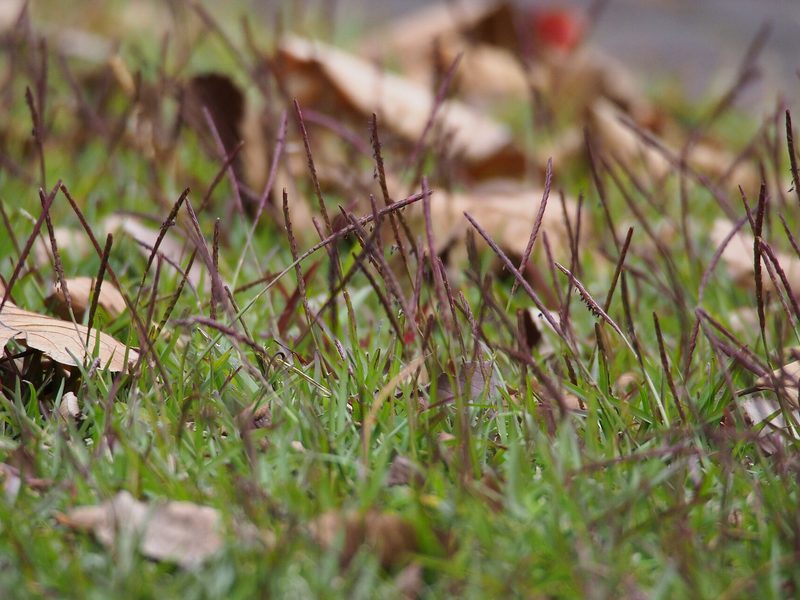

UGA calls centipede grass ideal for a homeowner who wants a lawn that needs little care, though little isn't none. The care it does need is mostly restraint. Read UGA's list of what goes wrong with centipede and it's a list of excess: too much nitrogen, nitrogen at the wrong time, lime the soil didn't need and a mower set too high.
How little fertilizer does centipede grass want?
About a pound of nitrogen per 1,000 square feet a year. UGA's centipede decline circular calls 1 pound ample for most established lawns, and its lawn bulletin gives 1 to 2 pounds, adding that the low end is typically enough.
Two pounds is the ceiling. A UGA county agent ties centipede problems to yearly nitrogen above that line, and the circular adds a timing rule: the first spring nitrogen waits until the soil 4 inches deep is steadily at 65 degrees.
Then check the bag's middle number. UGA's lawn bulletin recommends a zero-phosphorus fertilizer for centipede, giving 15-0-15 as an example, and says lime belongs on a centipede lawn only when a soil test calls for it. Centipede feeding is part of our fertilization and weed control service.
Yellow centipede grass: iron, soil pH or too much feeding
UGA calls centipede's yellowing iron chlorosis, and it names the causes:
- too much nitrogen, or nitrogen put down during spring green-up;
- a soil pH above 6.0, where the iron centipede needs becomes less available;
- high phosphorus levels in the soil.
Centipede likes acid soil, a pH of 5.0 to 6.0 by the circular's count. A UGA story gives 5.5 to 6.5 for bermuda grass, tall fescue and St. Augustine grass, so a liming habit that suits those can push centipede past its range.
The fix is finding the cause. A soil test that reads pH and phosphorus comes before any treatment, because yellowing from high pH or extra phosphorus keeps coming back until the soil itself changes.
Why does centipede grass decline after a few years?
UGA has a name for a centipede lawn that goes downhill after a good start: centipedegrass decline, the subject of a whole UGA circular. A UGA county agent says such problems often show up three to five years after a lawn is established.
Two of the circular's ways to head it off: avoid overfertilizing, and keep thatch from building up. Heavy nitrogen turns centipede a dark green that can pass for health, and UGA says those heavy applications can be a primary cause of decline.
Mowing height plays a part. The circular sets centipede at 1 to 1.5 inches and suggests raising it a quarter to half an inch during summer heat or as winter comes on. The county agent counts mowing too high among the causes of trouble, so that raise stays small.
Can centipede grass make it through a north Georgia winter?
It can, though it's more at home farther south. UGA says centipede fits the middle and lower part of Georgia best but can be grown statewide, and the TifBlair cultivar was bred between Tifton and Blairsville for better cold hardiness, to stretch the grass's range north.
Hard winters show the limit. After the snow and ice storms of early 2014, UGA warned that centipede and St. Augustine lawns in metro Atlanta and north Georgia would likely show cold damage that spring.
Starting centipede grass, and the yards it suits
Centipede can start from seed, which UGA's seeding table puts in May or June (the Georgia seeding calendar has the soil temperatures behind it). UGA's Georgia Turf webpage lists only sod and sprigs for it, while UGA's bulletin and circular include seed. For a lawn that starts as sod, see our sod installation service.
Finally, sun and traffic. Centipede performs best in full sun but can hold acceptable quality with as little as 6 hours of filtered sun a day, UGA says, a middling score in the shade ratings for Georgia grasses. Its wear tolerance rates poor in UGA's table, so it's a lawn for looking at more than playing on.
Centipede grass from fall to early spring
Can centipede grass be fertilized in the fall?
Late fall is a poor time for it. A UGA county agent lists late fall feeding, along with early spring feeding, among the causes of the problems that tend to surface a few years after a centipede lawn goes in. By late fall, the grass is heading into its winter dormancy.
Can centipede grass be overseeded with ryegrass?
No. UGA says grasses that spread only by stolons, with no rhizomes, shouldn't be overseeded, and it names centipede and St. Augustine grass as the examples. A ryegrass cover also adds stress at spring green-up, UGA notes, and that's a stress centipede can do without.
Why is my centipede lawn still brown in April?
It may simply be waiting on warm soil. A UGA turfgrass specialist ties warm-season green-up to the soil reaching 65 degrees, and a UGA county agent's advice for centipede is to let it green up on its own. Fertilizer won't hurry that along safely.