
Guides Beds, mulch and edging
Flower bed ideas for a Georgia yard
A flower bed that stays in color most of the year pairs perennials whose bloom times follow one another with annuals changed by season: pansies planted in fall for color through spring, then tender summer annuals once the danger of frost has passed. UGA's bulletins name the plants and the timing for Georgia.
Updated November 15, 2026
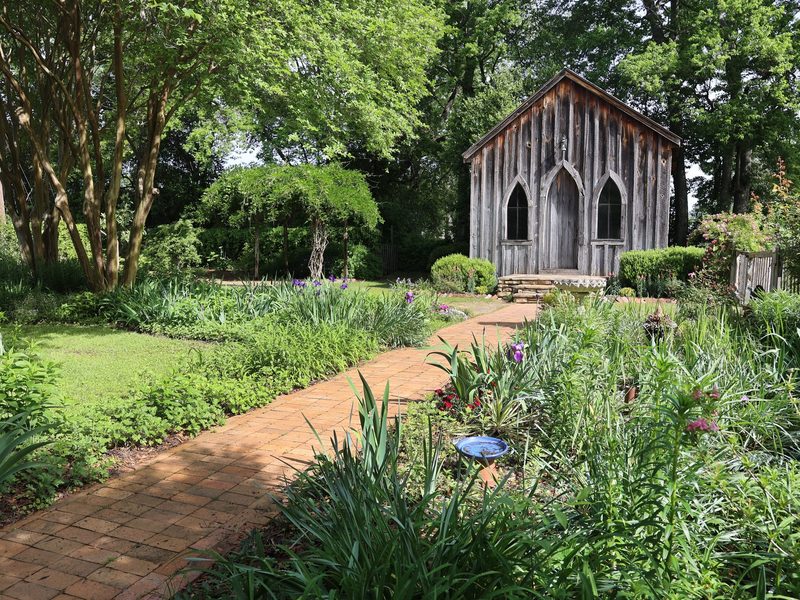
Our planting and flower bed webpage covers how a bed gets built from the soil up. This guide covers its shape and what goes in it, season by season.
How big should a flower bed be?
Big enough for the house and for the plants' grown size. University of Wisconsin Extension says a bed should have enough depth to match the scale of the house and yard and to give plants room to mature.
For perennial beds, Colorado State Extension says beds 6 feet wide or wider look most pleasing when space allows. The clean line where the bed meets the lawn is covered in the lawn edging guide.
Where do the tall plants go?
Toward the back, the same order the front yard guide gives for shrubs. For a perennial bed seen from more than one side, Colorado State Extension puts the taller plants in the middle, and it suggests bringing a few taller ones forward to vary the heights. It also says a garden looks good set against a background such as a fence, wall or shrubs.
How do you keep a bed blooming most of the year?
By timing. UGA Extension's perennial bulletin for landscape professionals says to know each plant's bloom period, so the bed can follow a continuous bloom sequence with year-round interest.
UGA's Flowering Perennials for Georgia Gardens bulletin spreads the season out. It calls daylilies among the most widely grown perennials in Georgia, with bloom usually peaking in June or July and some varieties flowering from May until October. Purple coneflower is easy to grow and reaches 3 to 5 feet, and asters bloom from late summer to fall.
Pansies and other cool-season annuals
Pansies carry the cold months. UGA says the pansy is the most popular hardy annual grown in Georgia, and that planted in the fall, it gives fall, winter and spring color.
Timing depends on where you are. UGA's fall gardening publication sets three pansy zones: north Georgia between Sept. 15 and Oct. 1, middle Georgia between Oct. 1 and Oct. 15, and south Georgia from Oct. 15 to Nov. 1. Rome falls in the north Georgia window.
Cool-season annuals don't last the summer. UGA says most hardy annuals, pansies included, aren't very heat tolerant and usually die once hot summer temperatures arrive, and that half-hardy annuals such as annual phlox and calendula grow best in cool weather and decline in midsummer heat.
Summer annuals after the last frost
UGA says most of the popular annuals grown in Georgia are tender annuals, such as vinca, zinnias and impatiens, and that they shouldn't be planted outdoors until the danger of frost has passed. Its bulletin doesn't give calendar months for them.
Many plants grown as annuals are really tender perennials, UGA notes, begonias and geraniums among them, and frost kills them when they're left outdoors.
Deadheading keeps perennials going
UGA's bulletin for landscape professionals calls deadheading, removing the spent flower heads, very important to most perennials. Purple coneflower is its example: it will simply stop growing and stop putting up new flowers if it isn't deadheaded.
The Flowering Perennials bulletin says coreopsis, among the easiest perennials to grow, blooms from May to fall if the old flowers are removed.
Who visits a flower bed?
Not only bees. UGA Extension's Towns and Union County office says bats, hummingbirds, native bees, wasps, moths and more all play an important role in pollination.
Shape, dividing and pollinators
Should a flower bed be curved or straight?
Loosely curved, unless you want a very formal garden. University of Wisconsin Extension suggests a few loose, bold curves, and it says loosely curved lines are easy to mow around and give a good flow through the landscape.
When should perennials be divided?
UGA's Flowering Perennials for Georgia Gardens bulletin says most perennials eventually crowd and need dividing, most often in fall or early spring, matching the dates you'd plant them. Each division should usually carry three to five shoots or growing points.
Which flowers bring pollinators?
The State Botanical Garden of Georgia at UGA picks pollinator plants by season and for Georgia natives. One of its 2023 picks, wild bergamot, is a 4 to 5 foot perennial whose summer blooms attract many different pollinators.