
Guides Beds, mulch and edging
River rock landscaping: where stone fits in a yard
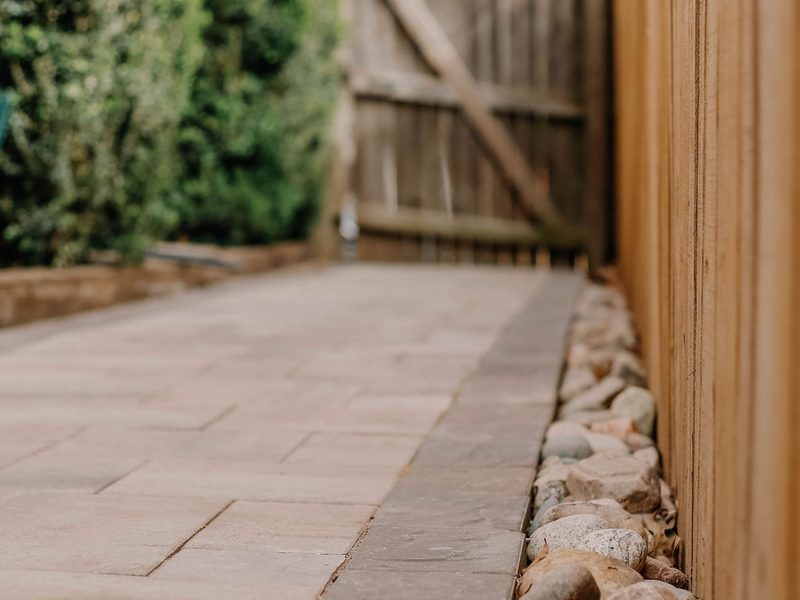
River rock landscaping works best in a few places, not across every bed. UF/IFAS reserves rock mulch for pathways, dry creek beds and the ground under downspouts, and says rock doesn't feed the soil, hold water, stop weeds or even out soil temperature the way organic mulch does.
Updated November 15, 2026
This guide found no UGA webpage on rock mulch, so its facts come from extension services elsewhere, each named where it's used. Paths and other built parts of a yard are on our hardscaping webpage.
Is river rock better than mulch?
Not in planting beds. UF/IFAS calls rock, gravel and other inorganic mulches very durable, but it doesn't recommend them as mulch in garden beds. What organic mulch does for a bed is on our mulch and pine straw webpage.
Rock also runs hot. K-State's Johnson County office in Kansas says rock mulch reflects and absorbs heat, which raises soil temperature and hurts plants, and UF/IFAS's Orange County office says rocks increase heat and can stress plants and increase plant pests and disease.
Where does river rock work?
Away from plants. UF/IFAS says that while rock mulch isn't recommended around plants, it may be used on pathways, in dry creek beds or under downspouts. Rock in a channel is covered in the dry creek bed guide, water from downspouts on our drainage solutions webpage, and stone paths in the stepping stones guide.
Do you need landscape fabric under river rock?
The sources split. UF/IFAS says to put landscape fabric down before rock on a path, dry creek bed or downspout area, or the rock will sink into Florida's sandy soils, and University of California's pest program says fabric under rock mulch keeps soil and rock from mixing, which would favor weeds and leave rocks in the soil.
On the other side, K-State's Kansas webpage says fabric under rock restricts water and air movement, which reduces soil health and plant growth, and makes removal and replanting extremely challenging. NC State says that as organic material builds up on top of fabric, weed seeds can germinate on it and create holes, and Illinois Extension says fabric helps suppress weeds only for a couple of years.
What size river rock should you use?
The extension sources behind this guide don't give a size for river rock. For a channel, the dry creek bed guide covers the mix of stone sizes its sources suggest.
Leaves, silt and weeds
Rock collects what blows in. K-State's Kansas webpage says Midwest winds blow fine soil and weed seeds into the cracks of the gravel, and that leaves left on the gravel break down into fine pieces that speed up the silting and the weed pressure. Weeds that root in the rock and the fabric beneath it, it says, are hard to get out.
It calls removing wind-blown leaves no easy task, and its options are a leaf blower or careful removal by hand.
How do you keep grass out of river rock?
With steady edging or a mortared border. An answer posted on Ask Extension, about a lawn creeping into rock mulch, calls the most effective way also the most time consuming: keeping the edge with a shovel or edging tool every couple of weeks, to cut off runners before they find soil under the rocks and take root.
The most expensive option it names is masonry: paving stones mortared together over a layer of crushed stone, making an edge the grass can't get through. The other border choices are compared in the lawn edging guide.
Removal, foundations and the lawn
Can river rock be taken out later?
It can, but it's work. K-State's Johnson County Extension office says rock is easier to install than remove, and that silt-filled rock mulch comes out one rock at a time or with a front-end loader. Settle on rock before it goes down, not after.
Can river rock go along the foundation?
UF/IFAS Extension's Orange County office in Florida says rocks can be used in a reasonable way around the house foundation or in rain gardens, to lessen the impact of rainfall from roof overhangs.
Will river rock end up in the lawn?
Some can. UF/IFAS says rocks can even become a nuisance if they get displaced onto lawns. Its Florida webpage names that problem without giving a fix, so it's worth deciding how the rock's edge will be finished before any stone is spread.