
Guides Drainage
Catch basin drains, from the grate to the outlet
Catch basin drains for a yard come in several box sizes, but the box isn't what limits the flow. NDS, a drainage product maker, says the size of the pipe connected to the outlets is. The grate, its load rating and a sump kept clean decide the rest.
Updated November 15, 2026
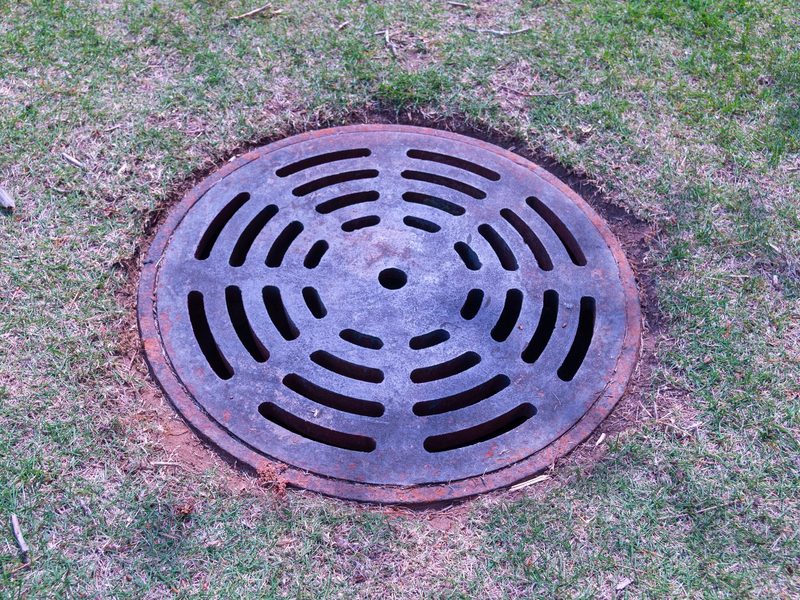
NDS sells its round catch basin for lawns, landscaped areas, patios and walkways. Below the outlet it builds in a sump, an area that collects particles before they can enter the pipe, which also makes the basin easier to clean. Each part of a basin, from the box to the grate to the pipe, comes with a choice.
What size catch basin does a yard need?
NDS sells risers for its 9, 12, 18 and 24 inch catch basins, and its round basin comes with 1, 2, 3 or 4 outlets.
Bigger isn't automatically better. NDS's own answer on how much water a basin can move is that the size of the pipe connected to its outlets is the limiting factor, so the pipe size belongs in the plan from the start.
How deep does a catch basin sit?
Deep enough for the grate to meet the finished ground. NDS's risers stack on top of the basin to bring the grate up, and some of them can be cut to any height.
NDS recommends backfilling and compacting the soil around each riser before stacking the next one, so the risers don't shift, and it doesn't recommend stacking more than 5 risers on a basin.
Grates and load ratings
NDS lists grates in flat plastic, atrium plastic, cast iron, galvanized steel, brass and magnesium bronze, with the options depending on the basin size. A flat grate lies flush, while the atrium grate has a raised dome that blocks debris at its base as water flows through the top.
Strength gets rated twice. NDS rates its basins at 60 psi when backfilled with soil, sand or gravel and at 575 psi when encased in 8 inches of concrete, and it says the grate must also meet the required load rating. A grate in a lawn and a grate where a car parks are different purchases.
Where does the water go next?
Through the pipe to an outlet. Our French drain installation webpage covers the outlet choices, and they work the same way for a line that starts at a catch basin. Whether a basin is the right fix at all is a question for our drainage solutions webpage.
One option at the end of the line is a pop-up emitter. LSU AgCenter describes it as a lid that pressure in the drain line pushes open, spreading the water over a large area, and that closes again once the water has drained and the pressure is gone.
Keeping a catch basin from clogging
NDS's cleaning step is short: remove the grate and clean out the sump. US EPA, writing about stormwater structures, says catch basins must be cleaned throughout the year to remove the sediment that builds up in them.
LSU AgCenter's advice for drain systems covers both ends: inspect regularly where water comes in, clearing debris and buildup from grates and openings, and where it leaves, at the pop-ups and drain pipes.
Do catch basins breed mosquitoes?
They can, because the sump holds water between storms. US EPA's fact sheet on stormwater structures and mosquitoes says the main breeding habitat is stagnant or shallow water that lasts at least 7 days, and that many mosquito species need 7 to 10 days in calm, standing water to get through their aquatic stages.
The same fact sheet calls proper design and maintenance the key to limiting mosquito production. For a yard basin, that means a sump that gets emptied, not one left holding water and leaves for weeks.
Outlets, seals and loose pipe
Can drain pipe connect straight to a catch basin?
Not on NDS basins. The maker says a catch basin universal outlet has to be used to connect pipes, and its locking outlet fits 3- and 4-inch corrugated pipe, 3- and 4-inch sewer and drain pipe, and 4-inch Schedule 40 pipe.
Is a catch basin watertight?
Only at the bottom, on NDS's basins. The maker says the sump area in the bottom of each catch basin is watertight, while the connections to risers and outlets are soil tight, not watertight. They keep dirt out without sealing water in.
What if the pipe fits loosely in the outlet?
NDS's fix is a bead of waterproof silicone on both the pipe and the outlet before the two are joined. A loose joint is worth fixing before the trench is backfilled, since it's buried once the soil goes back.