
Guides Drainage
What a French drain does and when a yard needs one
A French drain gives water in the ground an easier path than the soil around it, and it keeps working as long as that path stays open and keeps falling. Extension guides add the details: enough slope in the pipe, soil and roots kept out of the gravel, and a trench that isn't sitting in the water table.
Updated November 15, 2026
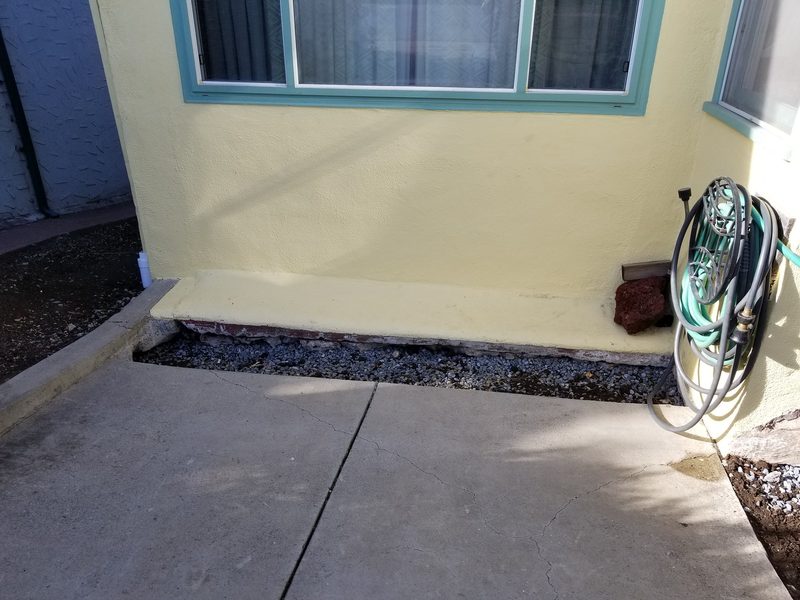
The idea is older than the pipe. NDS, a drainage product maker, says the earliest French drains were simple ditches filled with gravel, and that the same drain also goes by curtain drain, perimeter drain, weeping tile and agricultural drain. Today's version adds perforated pipe, and the pipe, the gravel and the slope decide how well it drains.
Does a soggy yard need a French drain?
It depends on where the water comes from. Washington State University Extension says French drains intercept water flowing across a slope, which makes them a fit for water moving downhill toward a spot you want dry.
The same guide says they work best when they aren't within the groundwater table. NDS adds a limit at the other end: on an extremely flat property, where the pipe can't get the slope it needs, another drainage method may work better.
Our drainage solutions webpage sorts the other fixes by the problem each one solves. Water that pools in one spot has its own guide, on catch basin drains.
Pipe, gravel and slope
NDS compares two kinds of perforated pipe, corrugated and smooth-wall PVC, and says the choice changes the slope. Corrugated pipe has to go in at a steeper slope, 2 percent at the least, while smooth-wall pipe can be laid flatter and still keep its flow.
Washington State University Extension gives a gentler figure for the trench: a slope between 0.5 percent and 1 percent, where 1 percent is a 1-foot drop over 100 feet. The two numbers don't match, so ask which pipe a plan uses and what slope it's laid at.
For the stone, LSU AgCenter covers the pipe with washed gravel. For clay soil, NDS calls for clean, angular gravel from 3/4 inch to 1.5 inches, to keep water flowing and prevent compaction.
Should the holes face up or down?
Down, in Ask Extension's answer, which sets the perforated pipe in the trench with its holes facing down.
That's one extension answer, not a universal rule. A pipe maker's instructions for its own product are worth reading before the pipe goes in the trench.
Do French drains work in Georgia clay?
They can. NDS says heavy clay soil that doesn't allow enough water to percolate can limit a French drain's effectiveness, and that the key to success in clay soil is a high-quality non-woven geotextile fabric.
What the fabric does, and where the water can go, are both on our French drain installation webpage.
Why French drains fail, and how long they last
None of the sources behind this webpage puts a number of years on a French drain's life. They name what cuts one short instead.
- Soil and roots: Ask Extension calls soil and roots getting into the gravel and pipe a leading cause of drain failure.
- Big trees nearby: NDS says areas with significant root intrusion from large trees can pose maintenance challenges, since roots may clog the system again and again.
- A blocked pipe: LSU AgCenter says flushing the pipe with hose water may be needed to clear debris.
In low areas particularly prone to flooding, LSU AgCenter suggests a grate at the soil surface over the line. It keeps large debris out of the pipe and offers an easy point of access for maintenance.
Swales, heavy equipment and shrubs
Is a swale better than a French drain in clay?
Not by default. Virginia Tech Extension's grass swale fact sheet says to avoid swales in compacted soils or soils with a high clay content, where runoff won't soak in quickly, and doesn't recommend them on slopes steeper than 4 percent, where the water moves too fast.
Can heavy equipment drive over a French drain?
Washington State University Extension warns against it. Heavy machinery and livestock can compact the soil and crush the drainage pipe, which blocks the water and can mean repairs or a full replacement. Plan truck and trailer routes around the trench line before it's dug.
How close can shrubs go to a French drain?
Ask Extension's answer keeps larger plants at least 3 to 4 feet from the trench area. Settle where beds and shrubs will go before the drain is laid out, since moving a shrub later means digging beside the pipe.