
Guides Drainage
Erosion control for a yard that keeps washing out
Erosion control in a yard means keeping soil covered and slowing the water that crosses it. Grass and ground covers carry most of the load once they fill in, while mulch, blankets, wattles and rock hold the ground until then, or for good where nothing will grow.
Updated November 15, 2026
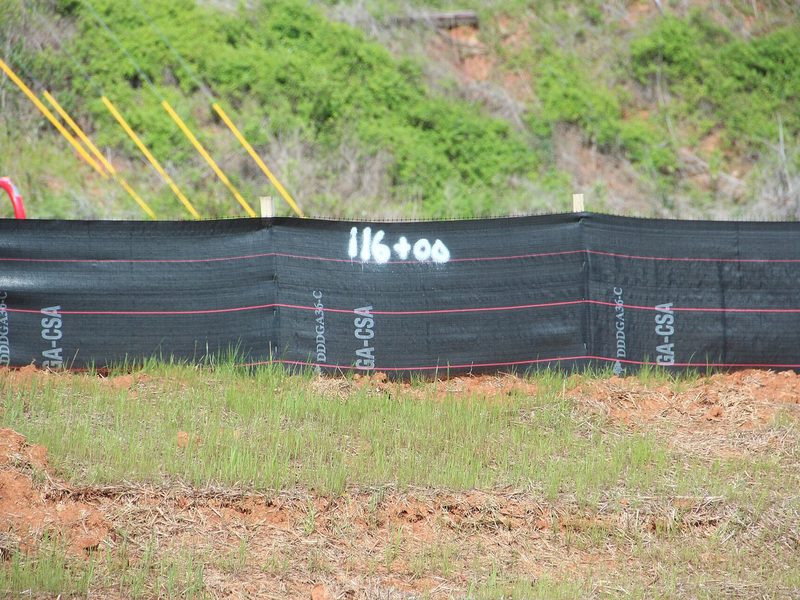
Rain does the first damage. A field guide from Kentucky's erosion program, hosted by US EPA, describes raindrops breaking down the structure of bare soil, then runoff on a slope stripping soil off in sheets, which can cut small rills and then larger gullies. Covering the soil interrupts the first step, and slowing the runoff interrupts the rest.
Work from the top of the slope down
The Kentucky guide takes erosion in order, starting at the top of the hill and working down the slope, and its first practice is diverting upland runoff around exposed soil. In a yard, that can mean roof water from the downspouts or water crossing from the lot uphill.
Its planning steps translate to a home project: assess the soils and slopes, preserve existing vegetation, and design the work to fit the lay of the land.
Steering water that arrives from uphill is drainage work, and our drainage solutions webpage covers downspout lines, swales and curtain drains. Holding the soil comes after.
Cover the soil first
Plain grass goes a long way. The Kentucky guide says grass seeding alone can reduce erosion by more than 90 percent, and that blankets and other products can push the protection further.
Our sod installation and hydroseeding webpages cover the two ways we put grass on bare ground, and UGA's advice on straw over new seed is on our mulch and pine straw webpage.
Mulch on a slope has to stay put. UGA Extension's Forsyth County office suggests a coarse-textured natural mulch, such as shredded bark or leaf mold, that won't roll down the slope.
Which ground covers hold a bank?
Our ground cover plants guide sorts UGA's choices by shade, sun and slope, and the retaining wall ideas guide names a sedge for dry, shady banks. Putting them in is planting work we do.
Junipers need room. UGA Extension's Lincoln County office says they may need 4 to 5 feet between plants. Until they spread, the soil between them needs a coarse mulch that stays put.
Mats, wattles and rock
Some ground can't be planted, and on those slopes UGA's Forsyth County office says permanent synthetic mats hold soil in place. The same office says coir logs and straw wattles slow and absorb stormwater so it soaks into the slope.
Where water runs hard down a steep ditch, the Kentucky guide lines the sides and bottom with riprap, mixed so smaller rock fills the spaces between the large rocks. A rock-lined channel can be a feature of the yard, and the dry creek bed guide covers building one.
No single fix has to carry a slope. UGA notes that combining several of these erosion solutions improves how they function and creates appealing landscapes.
When does a slope need a wall or a drain?
When cover can't keep up. A bank too steep to mow or plant can be broken into level terraces, which the retaining wall ideas guide shows, and our retaining walls webpage covers building them.
Water that keeps seeping out of a slope after the rain stops is a different problem. Our French drain guide covers drains that intercept water flowing across a slope.
What is Georgia's Green Book?
It's the Manual for Erosion and Sediment Control in Georgia, listed under that nickname by the Georgia Soil and Water Conservation Commission. Under Georgia's Erosion and Sedimentation Act of 1975, required erosion practices must be consistent with, and no less stringent than, the practices in the Manual.
Whether a home project falls under the state law at all is covered on our yard grading webpage. For a yard that doesn't, the Green Book is still a useful reference, because the state's erosion law measures required practices against it.
Fiber rolls, blankets and steep ground
Where do fiber rolls go on a slope?
Across it, on the contour. The Kentucky erosion field guide hosted by US EPA says fiber rolls can break up runoff flows on long slopes, and its instructions are to install them on the contour and trench them in slightly.
When does a slope need an erosion control blanket?
When it's steep, by the Kentucky field guide's rule. The same guide calls for erosion control blankets or turf reinforcement mats in channels whose bottom slopes more than 3 percent. Those are Kentucky's numbers, written for work sites.
How steep is a steep slope?
UGA Extension's Forsyth County office puts steep slopes at 20 percent, a rise of 1 foot in 5, and above, and it says ground that steep has special planting requirements. Our retaining wall ideas guide covers the gentler grades and the point where mowing stops.