
Guides Landscape design ideas
Backyard design ideas, room by room
Backyard design breaks a yard into rooms: a place to sit, open ground for play, a vegetable patch in full sun, and screens where a view needs hiding, joined by paths sized for how they're used. NC State Extension calls those spaces garden rooms, the destinations within a landscape.
Updated November 15, 2026
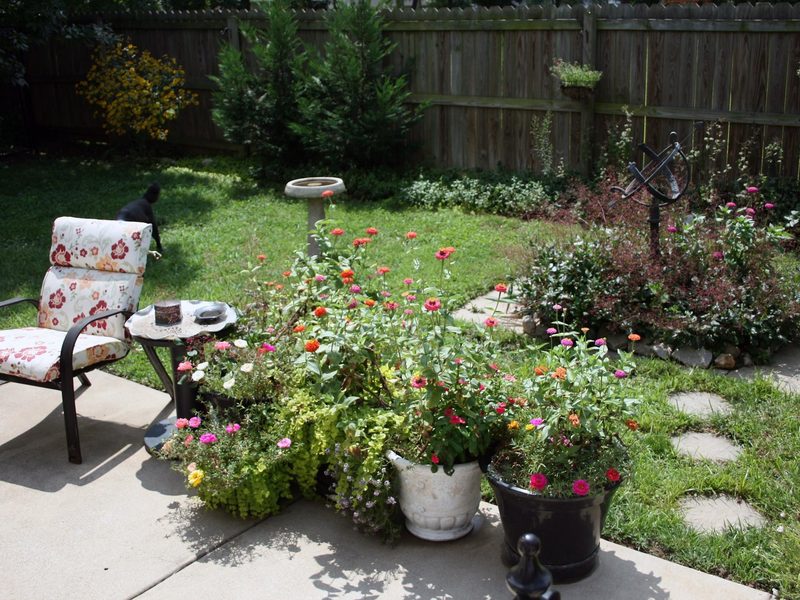
Each room's size follows its job. NC State says the scale of a garden room should be determined by its function, so a dining patio, a play lawn and a vegetable bed each get the space their use needs. How a whole yard gets divided by use is on our landscape design webpage.
What makes an outdoor space feel like a room?
It's the same things that make an indoor one. NC State defines a room as a space enclosed by walls, a floor and a ceiling, as well as a place where activities happen.
Outdoors, the ground plane is the floor, NC State says, and the overhead plane is a ceiling we often feel more than see. A tree canopy or a pergola over a patio gives a seating area that ceiling.
Where should the play area go?
In view of the house. NC State says play spaces are generally placed in major sight lines from the house, and it points out that those same spots make ideal future focal points once the play years are over.
A vegetable garden in the sun
UGA Extension's vegetable gardening guide asks for a site with at least 8 to 10 hours of sun a day, conveniently located near the house and a water supply. On a plan, that's worth settling before the patio or a new tree takes the sunniest ground.
Shade for the places you sit
Shade isn't just for the house. The pergola ideas guide covers NC State's advice on shading seating areas, along with shade grown on a frame, and the backyard patio ideas guide covers a patio's afternoon side.
Don't forget the air conditioner. The US Department of Energy says simply providing shade for an air conditioner can increase its efficiency by as much as 10 percent.
How do you screen a backyard for privacy?
With plants, a wall or both. NC State calls a natural evergreen hedge a good screening option if room and time allow, and the Department of Energy adds that dense evergreen trees and shrubs provide year-round shade and can block strong winds.
For hiding an adjacent view with a wall, Mississippi State Extension says walls work best when they're more than 6 feet tall, so check with the city or county before putting one up. The privacy trees guide covers the evergreens that grow into a screen and how far apart to plant them.
How do you move from one room to the next?
With a change underfoot or overhead. NC State's examples of transitional spaces and elements include entrance gates, paving changes, planted alleys, gateway arbors, edging and bridges. Even a strip of edging where a lawn meets a patio tells people they've stepped into a different space.
Room for wildlife
A native screen can do double duty. NC State says a biodiverse windbreak or screen of native plants also provides food and shelter for beneficial wildlife.
Habitat takes layers. NC State says ecosystems require a diversity of plants in various layers or levels to provide habitat for wildlife, and that native plants attract native pollinators.
Path widths, trash cans and what to map
How wide should backyard paths be?
NC State Extension sizes them by use. Paths that connect to the main entrance path run about 2.5 to 3 feet wide, and paths meant for one person about 1 to 2.5 feet. For the main walk to the front door, our walkways and steps webpage has the width.
What hides a neighbor's trash cans from the patio?
A shrub screen, in Alabama Extension's advice: if you sit on your patio and view your neighbor's garbage cans, plant a shrub screen to hide this or other unattractive views. In a tight space, NC State suggests vines on trellises instead.
What should a backyard plan map out?
Alabama Extension's list of functional areas includes play and recreation areas, anything from a sandbox to a tennis court, plus places for storing tools and growing vegetables. Each one needs its own spot on the drawing, even if it's only a corner of the yard.