
Guides Plants for Georgia yards
Fast growing trees for Georgia yards: picks and ones to skip
Fast growing trees can shade a bare lot quickly, but UGA Extension warns that a fast, large tree can overpower a small yard, and many fast growers have aggressive roots near the surface. Look for trees that grow fast and live long, and skip weak-wooded or invasive ones like Bradford pear, silver maple, willow and mimosa.
Updated November 15, 2026
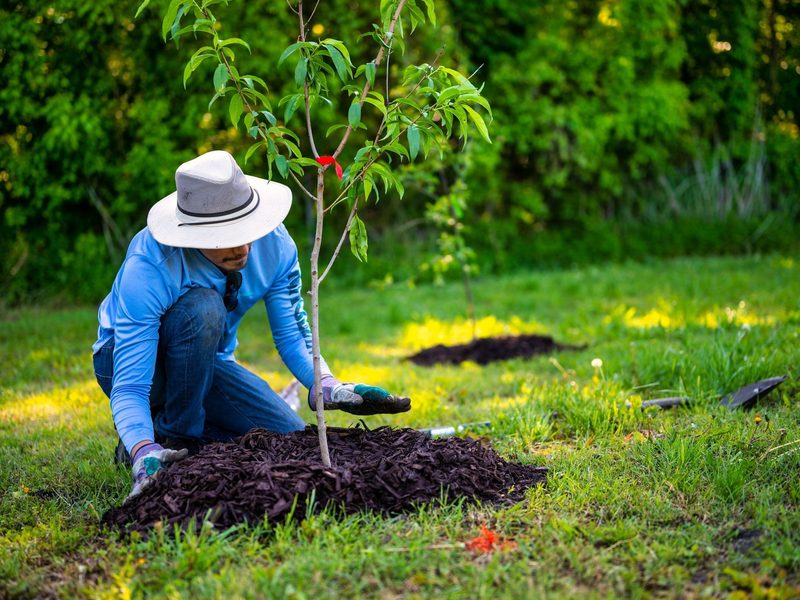
A tree that shoots up fast may keep going long after it's filled the space you had in mind. UGA Extension says homeowners usually pick trees for fast growth, to put shade on a sparse new home site quickly, and for a small to medium mature size, to fit a small lot. Those traits don't always come in the same tree.
Which fast growing shade trees are worth planting?
Start with how long the tree will live. UGA divides trees into two groups: long-lived trees, used as permanent shade trees, and short-lived ones, used only for temporary shade or screens. For a shade tree you plan to keep, the long-lived group is where to shop.
Two trees with NC State Extension descriptions worth knowing:
- Willow oak is a medium to large, fast-growing, deciduous oak, NC State says, and it's long-lived. It can also reach 100 feet tall, so it belongs where there's room for a big tree.
- Red maple grows fairly fast, according to NC State, and it's very cold-hardy, with a tolerance for urban conditions. Our guide to Georgia planting zones shows how cold winters run across the state.
That 100-foot figure is the reminder to look up any tree's mature height and spread before buying. UGA's Circular 1013, Shade Trees for Georgia, lists growth rate and life span tree by tree.
We plant trees as part of landscape installation, and a landscape design works out how big each tree will get before it goes in the ground.
If you need evergreen cover more than shade, NC State says Carolina cherry laurel grows rapidly, to 35 feet tall with a spread of 15 to 20 feet, a more modest size than the oak's. It's one of the screening trees in our privacy trees guide.
Weak wood, short lives and invasive trees to skip
Some fast growers come with their problems built in. UGA Extension's Bartow County office says soft-wooded, fast-growing trees such as willow, silver maple and 'Bradford' pear tend to have very weak, narrow branches that grow vertically. Here's the short list, with the reason for each:
- Callery, or 'Bradford', pear: NC State says its branches grow at upright angles with weak crotches that break with age, wind and ice. NC State also says the tree came from Asia and is invasive in North Carolina and elsewhere in the southeastern United States.
- Silver maple and willow: the soft wood and weak, narrow, upright branches UGA's Bartow office describes.
- Mimosa: NC State calls it aggressive, high-maintenance and short-lived, and a UGA Extension faculty member lists it among invasive trees that have better alternatives.
- Empress tree and tree of heaven: named by the same UGA specialist, alongside mimosa, as invasive plants with better alternatives for the surrounding environment.
None of these is worth planting, however fast it fills in.
What does fast growth cost?
Size, first. Plenty of trees are sold as fast growing with no word on how big they'll get, and UGA warns that a fast-growing, large tree can quickly overpower a small landscape in an urban setting.
Roots, second. UGA says many fast growing trees have aggressive root systems with numerous surface roots, which is worth weighing before you plant one near a walk, a patio or a flower bed.
Upkeep, third. Short-lived trees need more maintenance, UGA says, and typically shouldn't be planted near sheds, power lines and other structures that a failing tree could damage. Give a short-lived tree a spot where its limits won't matter, well away from the house, the shed and the lines.
Leyland cypress makes the same trade in an evergreen. UGA calls it rapidly growing, and the disease problems that come with it get a full section in our guide to privacy trees.
Small yards have their own answer in UGA's advice on crepe myrtles: choose one that grows to the height you want. Our crepe myrtle pruning guide covers the size groups.
Bradford pears, placement and red maples
Are Bradford pears invasive?
NC State Extension says Callery pear, the tree 'Bradford' pears belong to, came from Asia and is invasive in North Carolina and elsewhere in the southeastern United States. Add the weak branch crotches NC State describes, which break with age, wind and ice, and it's a tree to pass on.
Where shouldn't a fast growing tree go?
Give it room on every side. UGA says short-lived trees typically belong well away from sheds, power lines and other structures a failing tree could hit, and many fast growers put out numerous surface roots, which matters near a walk or patio.
Does red maple grow fast?
Fairly fast, NC State Extension says, and it's very cold-hardy, with a tolerance for urban conditions. For comparison, NC State calls willow oak fast-growing and long-lived, with a height of up to 100 feet, so it needs room for a big tree.