
Guides Landscape design ideas
Xeriscape in Georgia: a yard built to need less water
Xeriscape, as UGA defines it, is a seven-step approach to water conservation in the landscape: plan it, improve the soil, pick plants that suit the site, keep turf to practical areas, water efficiently, mulch, and keep up with maintenance. Built and managed that way, UGA says, a landscape uses up to 50 percent less water than a traditional one.
Updated November 15, 2026
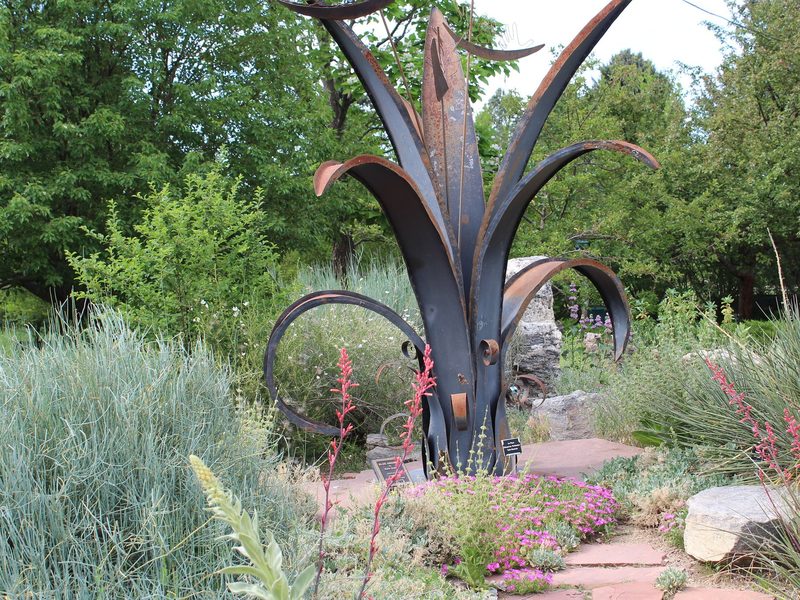
UGA says the seven steps work in any climate, and Georgia's version of the problem runs the other way from what the name suggests.
What are the seven steps?
UGA lists them in this order, and four of them have a home elsewhere on this website:
- Planning and design: our landscape design webpage covers the site analysis that comes first.
- Soil analysis and improvements: our landscape installation webpage covers the soil test that comes before planting.
- Appropriate plant selection: plants that suit the spot, covered below.
- Practical turf areas: lawn where it gets used, covered below.
- Efficient irrigation: our irrigation webpage covers drip lines and Georgia's watering rules.
- Use of mulch: our mulch and pine straw webpage gives UGA's depths by material.
- Appropriate maintenance: the upkeep that keeps the other six working.
Does xeriscape work in Georgia's climate?
It does, and here it's as much about watering less as about getting through a drought. UGA's xeriscape circular says over-watering is more of a problem than drought in Georgia landscapes, and that plants are most often over-irrigated during periods of limited rainfall, a time when water resources are in short supply.
How much water does a yard use?
Nationally, a lot. EPA's WaterSense program says outdoor water use accounts for more than 30 percent of total household water use on average, and as much as 60 percent in arid regions. Those are national figures, not Rome's.
Some of it never reaches a root. EPA says as much as 50 percent of the water used outdoors is lost to wind, evaporation and runoff caused by inefficient irrigation methods and systems.
Zoning the yard by water use
UGA puts numbers on the plan: ideally no more than 10 percent of the landscape zoned for high water use, 30 percent or less for moderate water use, and 60 percent or more for low water use.
Grouping plants by what they need is how those zones get drawn, and the landscape design webpage linked above covers that grouping.
Which plants does UGA call adaptive?
UGA's water-wise guide for the Georgia Piedmont names adaptive plants such as juniper, crepe myrtle, yaupon holly and oak, along with native, undisturbed areas left as they are. UGA wrote that list for the Piedmont, so match each plant to the sun and soil where it'll grow before buying.
Our crepe myrtle pruning and ground cover plants guides cover two of those in more depth, and the deer-resistant plants guide helps where deer browse.
Practical turf areas
Lawn earns its place where people play and walk. UGA says turfgrass requires more frequent maintenance than most other plants, and that it usually receives the highest amount of supplemental irrigation of any plant in the landscape.
So the lawn that stays should be the lawn that gets used. The types of grass in Georgia guide covers which turf suits sun and shade here.
The name, drought tolerance and a smaller lawn
Where does the word xeriscape come from?
Colorado, in 1980, by UGA Extension's account. The word comes from the Greek xeros, which means dry, and UGA's circular gives the pronunciation as zera-scape, so the first sound is a z, not an x.
Is xeriscape just drought-tolerant plants?
Not by UGA's definition. Its circular says a water-wise landscape is more than just a drought-tolerant landscape, and that it's designed, installed and managed for year-round beauty. The aim is a yard that looks good in every season, not one that merely gets through a drought.
Can I shrink my lawn without starting over?
Yes. UGA's water-wise guide for the Georgia Piedmont shows it on an existing house: increase the bed area by killing grass and covering the area with mulch. The beds get bigger and the lawn gets smaller around a house that's already landscaped.