
Guides Plants for Georgia yards
Camellias in Georgia: sasanqua, japonica and tea scale
A camellia blooms while much of the yard rests: sasanqua in late fall and winter, and japonica from as early as October to as late as mid-March, depending on the variety, NC State Extension says. Prune fall and winter bloomers in early March and spring bloomers right after they flower, and watch the leaves for tea scale.
Updated November 15, 2026
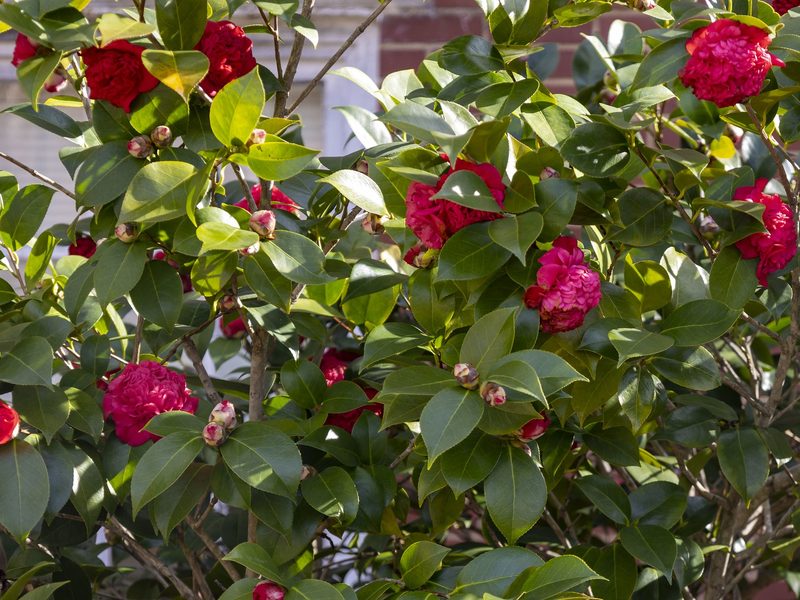
Which camellia you have decides how much sun it wants, how much pruning it needs and when it flowers. UGA sorts camellias by bloom season, with some flowering in fall, some in winter and some in spring, and its pruning dates follow that calendar. NC State Extension fills in the details for the two kinds below, sasanqua and japonica.
Sasanqua or japonica: which blooms when?
Sasanqua blooms in late fall and winter, NC State says, which makes it a focus of the landscape just as many other ornamentals go dormant.
Japonica runs on a schedule set by the variety. Depending on which one you have, NC State says, it can start flowering as early as October and finish as late as mid-March.
The two seasons overlap, so a bed with both kinds, or with a few japonica varieties, can carry flowers from fall into March. Check the tag for the variety's season before you buy, since that one detail also sets its pruning date.
Sun, shade and soil for each camellia
NC State gives the two kinds different spots. Sasanqua handles full sun to partial shade and needs well-drained soil with a neutral to acidic pH.
Japonica prefers shade to part shade, with some protection from drying winter winds. It wants well-drained soil that's high in organic matter and slightly acidic, at a pH of 5.5 to 6.5.
- A sunny bed, or one with only partial shade: sasanqua, which NC State says takes full sun to partial shade.
- A shady corner out of the winter wind: japonica, which prefers shade to part shade and shelter from drying winds.
- Not much time for pruning: japonica, which UGA says needs little of it.
Azaleas like a similar acidic soil rich in organic matter, so the two can share a bed; our azalea care guide covers the azalea side of that bed.
When you're ready to plant, we set camellias through our planting and flower bed service.
When should you prune a camellia?
For japonica, rarely. UGA's pruning bulletin says Camellia japonica varieties require little pruning, and it files camellias under the plants to prune before spring growth begins.
Sasanqua is another matter. UGA says sasanqua varieties may need considerable pruning, and for a more natural look it recommends thinning branches instead of shearing the plant.
Timing follows the flowers. If pruning is needed, UGA says it's best to prune the fall and winter bloomers in early March and the spring bloomers just after they bloom. NC State adds a reason to respect those dates: next year's sasanqua blossoms appear on old growth, so a cut at the wrong time takes flowers with it. In short: fall and winter bloomers wait for early March, and spring bloomers get pruned right after they flower.
Camellias are among the shrubs our shrub and hedge trimming service shapes.
What is the white fuzz under camellia leaves?
Most likely tea scale, which UGA calls a serious pest of camellias and hollies in Georgia nurseries and landscapes. The insects pierce the leaf from the underside and suck the sap, and the damage shows up as yellowing on the upper surface. Underneath, the male scales build a thin, soft, white waxy shield, UGA says, and in a heavy infestation white, cottony filaments hang from the leaves and dead twigs.
Getting it under control takes patience. UGA's tea scale circular says insecticides are most effective against the crawler stage, so when a treatment goes on counts. It also says it usually takes two to three years to bring an infestation under control after effective insecticides go on.
UGA's own word for tea scale is "very challenging to control." That's why it pays to have your county Extension office confirm the pest before anything gets sprayed. Don't expect one treatment to finish the job.
Camellia sun, timing and tea scale
Can a camellia grow in full sun?
A sasanqua can. NC State Extension says it takes full sun to partial shade. Japonica is the one to keep in the shade, since NC State says it prefers shade to part shade, along with some protection from drying winter winds.
Does bloom time change when to prune a camellia?
Yes. UGA says fall and winter bloomers are best pruned in early March, and spring bloomers just after they bloom. Next year's sasanqua blossoms come on old growth, NC State notes, so a late cut costs flowers.
Do hollies get tea scale too?
They can. UGA names camellias and hollies among the ornamental plants tea scale seriously damages in Georgia nurseries and landscapes. A holly planted near an infested camellia is worth checking, starting with the undersides of its leaves.