
Guides Plants for Georgia yards
Deer resistant plants for Georgia yards
Deer resistant plants are better called deer tolerant: UGA Extension says no plant is truly deer resistant, and when food runs short, deer may eat the ones thought to be safe. Its list still names many they rarely browse, from boxwood and wax myrtle to liriope, Lenten rose and Russian sage.
Updated November 15, 2026
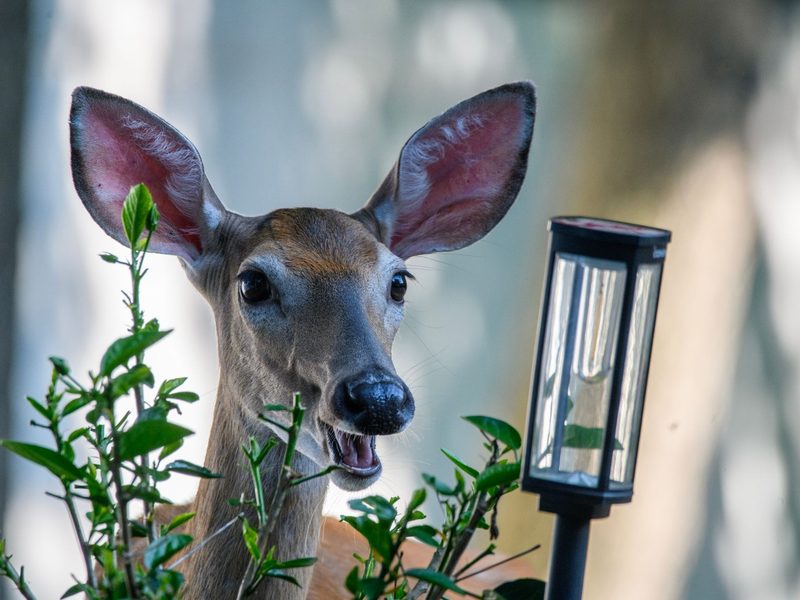
UGA's Circular 985, Deer-Tolerant Ornamental Plants, is the starting point in Georgia. It sorts plants into the ones deer rarely browse and the ones they browse occasionally or frequently, with separate lists for shrubs, for vines and ground covers, and for perennials and bulbs. The picks below come from those lists, with a few notes from NC State Extension.
Which shrubs do deer usually leave alone?
UGA's list of shrubs deer rarely browse includes boxwood, osmanthus, viburnum and wax myrtle. Those four make a short list to build a bed around where deer roam.
Taller screens get their own notes from NC State Extension. It calls American holly highly deer resistant, and it says the holly eventually stands 40 to 60 feet tall, 10 to 20 feet across, though it gets there slowly. That's a screen plant more than a foundation shrub.
Green Giant arborvitae resists deer as well, NC State says, along with most diseases and insects, though it warns this plant can quickly grow very large in a space that's too small for it. Carolina cherry laurel is a different story: NC State says white-tailed deer browse it. All three are covered in our privacy trees guide.
Perennials and ground covers deer rarely browse
For flowers, UGA's list of herbaceous perennials and bulbs deer rarely browse includes:
- Astilbe
- Catmint
- Lenten rose
- Purple coneflower
- Russian sage
- Yarrow
For low plants, the vines and ground covers list includes bugleweed (ajuga), dwarf mondograss, Japanese pachysandra, liriope and thyme. Our ground cover plants guide covers how spacing works and how to check a ground cover's invasive rating.
We plant beds like these through our flower bed installation service, and a landscape design can lay out the whole yard with the deer-tolerant picks where they're needed most.
What do deer avoid, and what do they go after?
Smell, feel and taste steer them. UGA says deer generally don't like plants with pungent aromas, and they shy away from plants with prickly or rough leaves and plants with a bitter taste.
The season matters too. Deer like nutrition-rich plants, UGA says, especially in spring and summer, when does are pregnant or nursing, fawns are growing and bucks are growing antlers. So a bed that sits untouched all winter can still get hit once the new growth comes in.
As for repellents, UGA says that although a number of commercial deer repellents are on the market, none of them is 100 percent effective.
Why isn't any plant deer proof?
UGA is blunt about it: there's no such thing as a deer-resistant plant. When deer populations are high and food becomes scarce, they may feed on plants that are thought to be deer tolerant. The circular's own title says "deer-tolerant," and that's the honest word for it.
The lists have limits, too. UGA explains that most deer lists are built from observational trial-and-error data instead of controlled scientific studies, and that many variables influence what deer choose to eat. A plant that's ignored in one yard can be eaten in the next.
Some plants come with a warning attached. UGA's list of plants deer occasionally or frequently browse, which it says need protection, includes American beautyberry, black-eyed Susan and blanket flower.
UGA also left off plants known to be invasive and a serious problem in natural areas, whatever their deer tolerance. A plant deer won't touch can still be a poor pick.
Put together, that makes a plain plan for a yard deer visit:
- Build the bed mostly from the "rarely browse" lists.
- Give anything from the "occasionally or frequently" list some protection.
- Expect more browsing pressure in spring and summer, and when deer are plentiful.
- Skip anything invasive, however little deer care for it.
Boxwood, liriope and black-eyed Susans
Are boxwoods deer resistant?
Boxwood is on UGA's list of shrubs deer rarely browse, which is about as good as it gets. The usual caution still applies: UGA says no plant is truly deer resistant, and deer may eat plants thought to be tolerant when food is scarce.
Do deer eat liriope?
Not often. Liriope is on UGA's list of vines and ground covers deer rarely browse, with ajuga, dwarf mondograss, Japanese pachysandra and thyme. One note for buyers: UGA reports that Liriope muscari is a category 3 plant on the Georgia Exotic Pest Plant Council's list, which UGA calls a minor problem.
Can I plant black-eyed Susans if deer come through?
You can, with protection. UGA lists black-eyed Susan among the plants deer occasionally or frequently browse, along with American beautyberry and blanket flower, and it says plants on that list need protection. Without it, they're at risk.