
Guides Grass and sod
Bermuda grass care for Georgia lawns
Bermuda grass is a full-sun lawn grass: UGA says it does its best with at least 8 hours of sunlight a day and typically performs poorly in shade. UGA's lawn calendar sets common types at 1 to 2 inches and hybrids at 1 to 1.5, and spring feeding waits for 65-degree soil.
Updated November 15, 2026
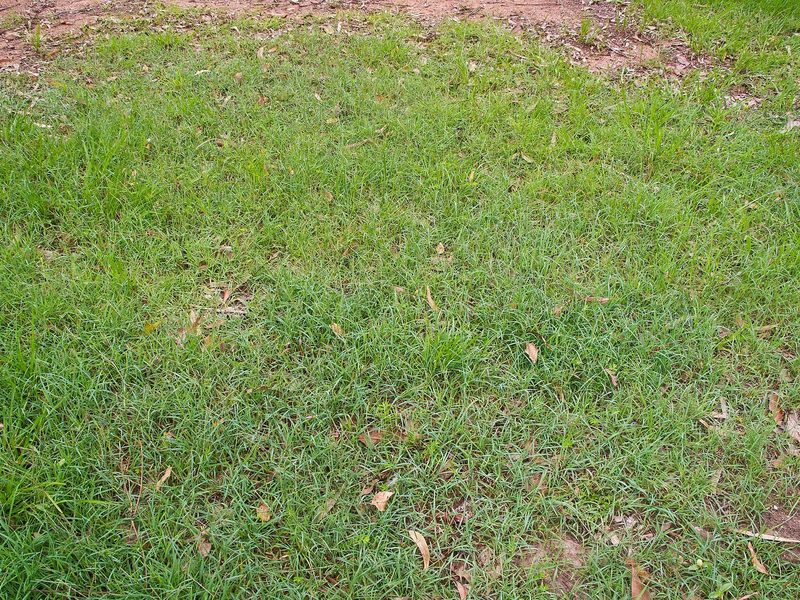

In an open yard in July, bermuda grass grows vigorously, which is UGA's own word for how warm-season grasses behave from May to October. Under a big shade tree, the same grass thins out. A bermuda lawn asks for three things: full sun, a low mowing height and a spring feeding that waits for warm soil.
How short should bermuda grass be mowed?
That depends on which bermuda you have. UGA's Bermudagrass Lawn Calendar gives a range for each type:
- Common bermuda grass: 1 to 2 inches.
- Hybrid bermuda grass: 1 to 1.5 inches.
- Either one in hot weather: half an inch higher.
The calendar adds one rule for every cut: never take off more than a third of the grass's height at once. For a hybrid kept at 1 inch, that means mowing before it passes 1.5 inches. At the height of summer, that rule keeps the mower busy.
UGA's webpages don't all print the same numbers. Its Georgia Turf species webpage lists hybrids at 0.5 to 1.25 inches, a little lower than the calendar. Keeping pace with a bermuda lawn through the summer is what our lawn care service is for.
When bermuda grass greens up, and why feeding waits
Bermuda grass wakes up on the soil's schedule. A UGA turfgrass specialist says warm-season turf greens up once the soil reaches 65 degrees, and UGA's calendar holds back nitrogen until the soil 4 inches down stays at 65 degrees and keeps rising.
Feeding early backfires. UGA explains that nitrogen in late winter or early spring can push warm-season grass out of dormancy too soon. Then the late cold snap arrives, one UGA calls inevitable, and the grass has already spent the food reserves it stored for spring.
For a date to plan around, UGA's Fulton County Extension office says lawns should be fully green by May, which makes it a safe month to start nitrogen, with fertilizer and lime based on a recent soil test. Over a full year, the Bermudagrass Lawn Calendar gives 2 to 5 pounds of nitrogen per 1,000 square feet.
Feeding a bermuda lawn is part of our lawn fertilization and weed control service.
Why does bermuda grass thin out in shade?
It's built for sun. UGA says all bermuda grasses thrive in hot weather but typically perform poorly in shade, and it rates common bermuda's shade tolerance very poor, the lowest of any warm-season lawn grass in its table. Hybrids do a little better, at fair to poor.
So where trees cut a yard's sun well below that 8-hour mark, bermuda grass thins. For those spots, the shade rankings in our grass types guide show which lawn grasses hold on with less light.
Common or hybrid: seed, sod and sprigs
The two kinds go in differently. UGA says common bermuda grass gets used on home lawns because it's easy and economical to grow from seed, and its seeding table puts that seed in the ground in May or June; the seeding calendar guide explains the soil temperatures behind that window.
Hybrid bermuda grass can't be grown from seed at all. UGA says the hybrids have to be planted as sod, sprigs or plugs, and its Georgia Turf webpage says most improved hybrids go in by stolons or sod.
Hybrids differ in cold tolerance, too. In 2014, after snow and ice storms in metro Atlanta and north Georgia, a UGA turfgrass specialist said Tifway isn't a particularly cold hardy cultivar, while TifSport, TifGrand and Patriot are.
Why bermuda grass creeps into flower beds
The runners that knit a bermuda lawn together are the same ones that carry it into beds. UGA says bermuda spreads by both stolons, which run along the surface, and rhizomes, which run underground, and that this makes it hard to control around flower beds, walks and borders.
EDDMapS, UGA's invasive species mapping site, shows bermuda grass in the Georgia Exotic Pest Plant Council's Category 2, for plants the council counts as a moderate problem in the state's natural areas; the Georgia grass types guide explains what that list does and doesn't mean.
Closer to home, edging the lawn's borders and trimming along beds are part of our lawn care service.
A year of bermuda grass care in Georgia
UGA's Bermudagrass Lawn Calendar lays the year out month by month. In short:
- Winter: the lawn sits brown and dormant, and fertilizer waits, since UGA says late-winter feeding can wake the grass too early.
- Spring: green-up follows the soil to 65 degrees, and nitrogen starts once the lawn is fully green, by May in UGA's Fulton County advice.
- Summer: growth peaks, so the mower runs often, set half an inch higher in the hottest weeks.
- Fall: growth tapers off as the May-to-October season ends, and the lawn browns as it heads into dormancy.
Bermuda grass in winter, drought and late summer
Is brown bermuda grass in winter dead?
Usually it's just dormant. UGA says warm-season grasses turn brown and go dormant every winter, then green up as the soil warms. Cold can still kill it, though: UGA's tables rate common bermuda's cold hardiness as poor, so a patch that stays brown after the rest of the lawn has greened deserves a closer look.
How well does bermuda grass handle drought?
Well, by UGA's account. It calls common bermuda drought resistant and says it grows on many soils. UGA's own studies found that one hybrid, TifTuf, uses about a third less water, though that result belongs to TifTuf alone and not to bermuda grass in general.
When is it too late in the year to seed bermuda grass?
Around the middle of August. UGA says the last safe seeding date varies across the state, but seed sown by about the first half of August has time to grow a supporting root system before cold weather and frost arrive. Later seedlings risk meeting the cold without those roots.