
Guides Fire pits, patios and outdoor living
Fire pit ideas for a Georgia backyard
Fire pit ideas come down to three choices: how big the fire gets, where people sit, and what surrounds the pit. Georgia's fire code, Smokey Bear's campfire rules and the ADA's bench standard each answer part of that.
Updated November 15, 2026
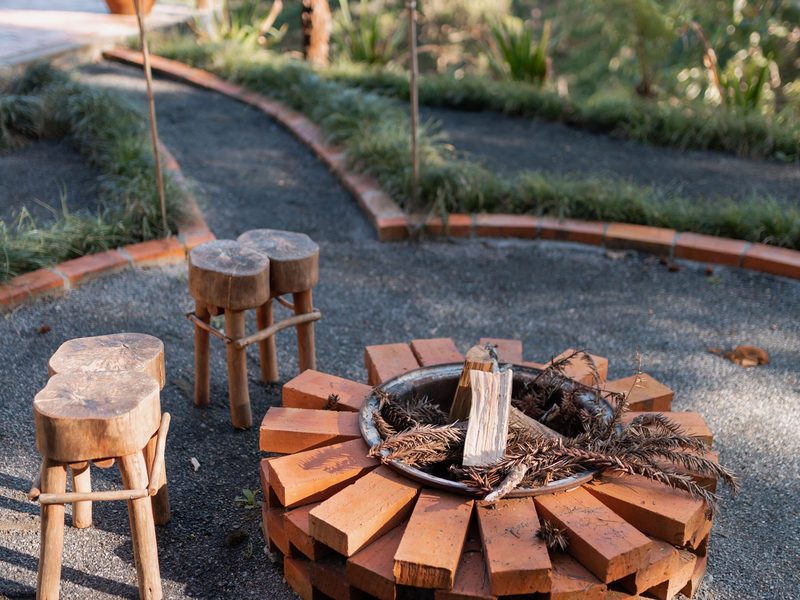
With fire pit ideas, the space around the fire takes more planning than the fire does. Keep the fire itself within the fire code's size for a recreational fire, give people seats at a comfortable height, put something that won't burn between the pit and the lawn, and have water ready before the first log is lit.
How big can a backyard fire be?
Georgia's fire code text defines a recreational fire as one with a total fuel area of 3 feet or less in diameter and 2 feet or less in height. That's the size of the fire, the wood actually burning, not the ring of stone around it. A fire inside an outdoor fireplace falls outside that definition, as the outdoor fireplace guide explains.
So a wide pit doesn't have to mean a wide fire. A ring with a broad cap can keep the fire well inside those limits and still give people a ledge for a plate or a drink. A smaller fire is also quicker to put out at the end of the night.
Distance from the house is a separate question with its own numbers, and our fire pit webpage covers it, along with Georgia's summer burning rules.
Seat walls and benches at a comfortable height
Built-in seating fixes the circle in place, and there are no chairs to drag in when it rains.
For height, a handy guide is the 2010 ADA Standards, which put the top of a bench seat 17 to 19 inches above the ground. That standard is written for public benches, not backyards, but it's a comfortable range for a seat wall.
Mixing the two works well: a curved seat wall around part of the fire, with room left for movable chairs, so the circle can open up when more people come.
What goes around a fire pit: gravel, pavers or grass?
Not grass, at least not up to the edge. Smokey Bear's campfire guidance says to keep a fire at least 15 feet from tents, vegetation and low-hanging branches. A backyard isn't a campsite, but dry grass is vegetation, and it's the nearest fuel to an in-ground pit.
That leaves a ring of something that can't burn. Pavers or stone give chairs a level floor, and our fire pit webpage covers the patio around the pit.
Gravel is the looser option, and like any loose stone it needs an edge to stay put; the patio surfaces guide compares the choices.
Putting the fire out at the end of the night
Smokey Bear's three steps work just as well in a backyard:
- Drown: pour plenty of water on the fire until the hissing stops, drowning all the embers, and don't rely on dirt or sand alone.
- Stir: use a shovel to mix the water into the embers, dirt and sand.
- Feel: hover the back of your hand over the ashes to check that the embers are cool.
Set the water out before the fire is lit, a full bucket or a hose that reaches, so the first step never waits on a trip to the spigot.
Seating room, late nights and overhead clearance
How much room does a fire pit seating area need?
Room for the seats plus space to walk behind them. NC State Extension's design handbook allows 2 to 3 feet of walking room around chairs, so measure the chairs or benches you plan to use and add that much behind them all the way around.
Can a fire pit be left to burn down overnight?
No. Georgia's fire code text says a recreational fire must be constantly attended until it's extinguished. Plan the last log early enough that the fire can be put out properly before anyone heads to bed.
Can a fire pit go under a tree or a pergola?
Smokey Bear's campfire guidance asks for vertical clearance of at least 3 times the height of the flames. A spot in the open, with no limbs, beams or vines overhead, is the safer place for a fire pit.